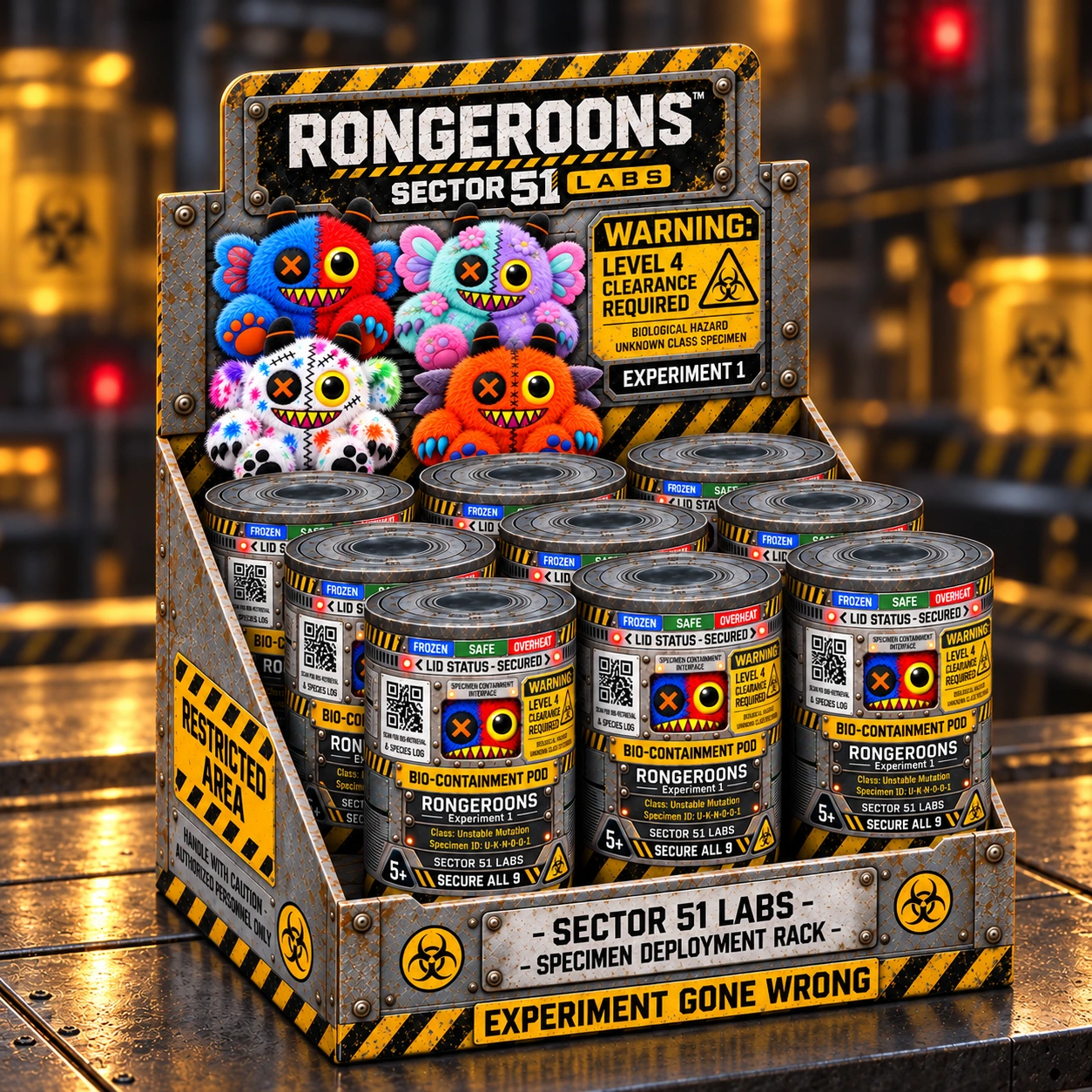
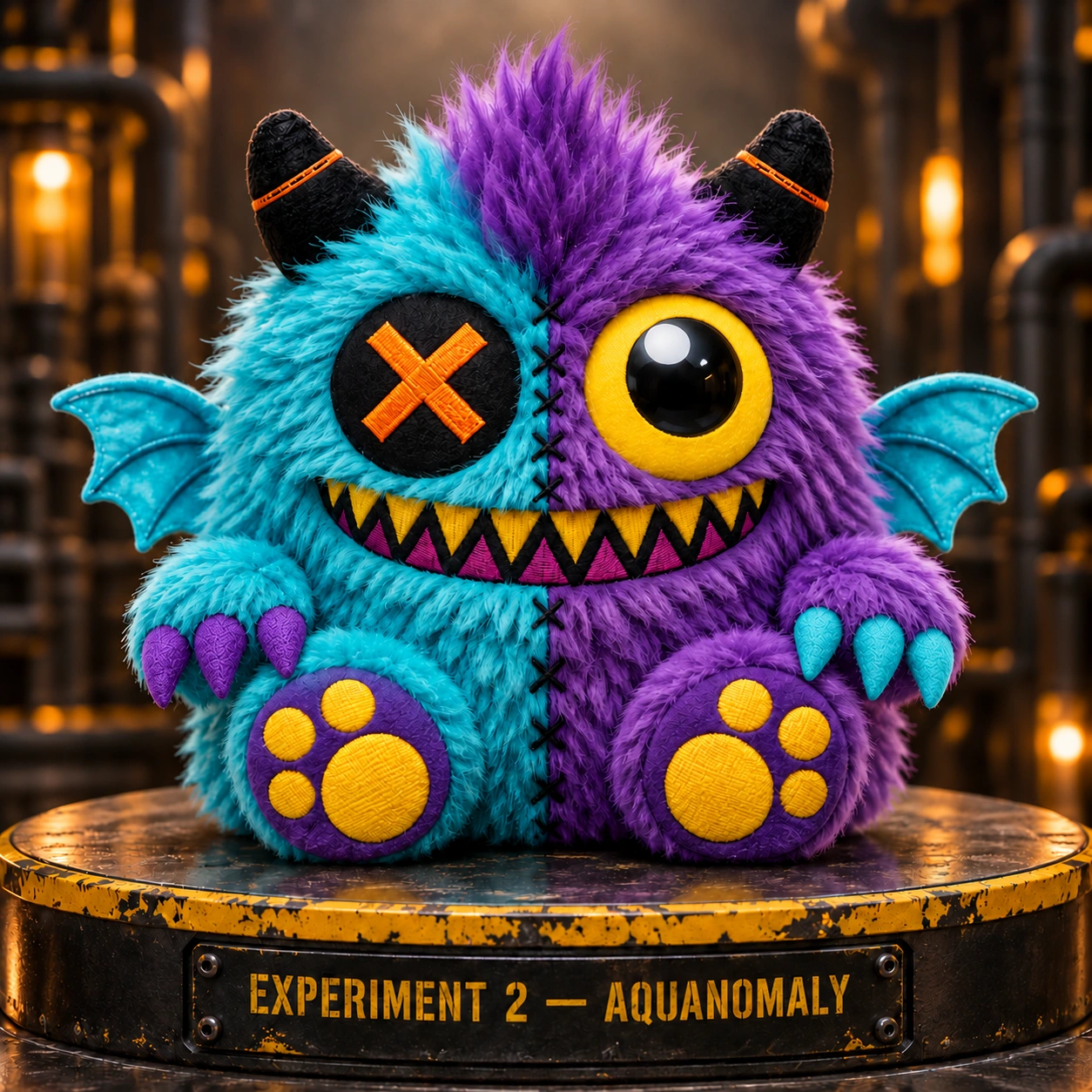
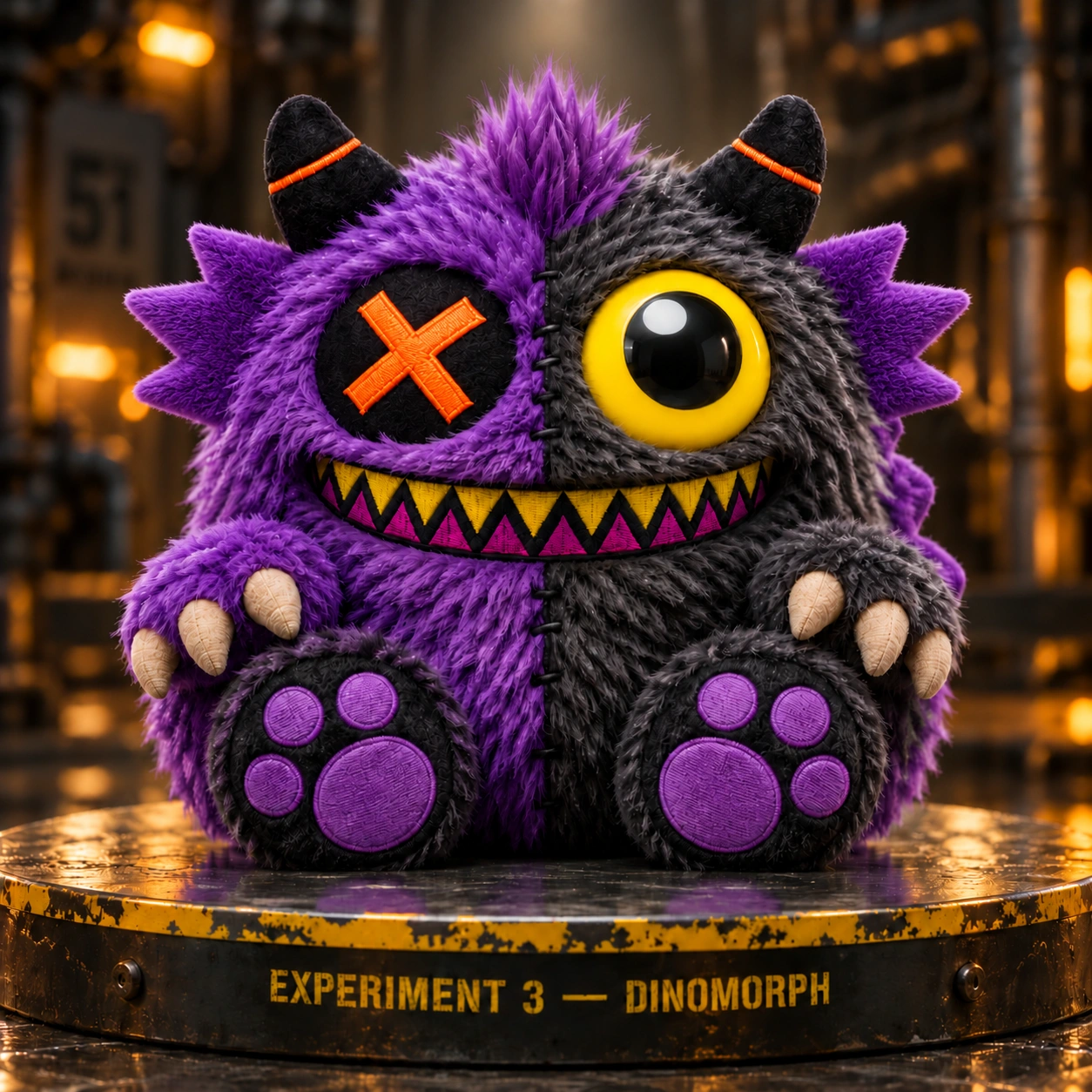
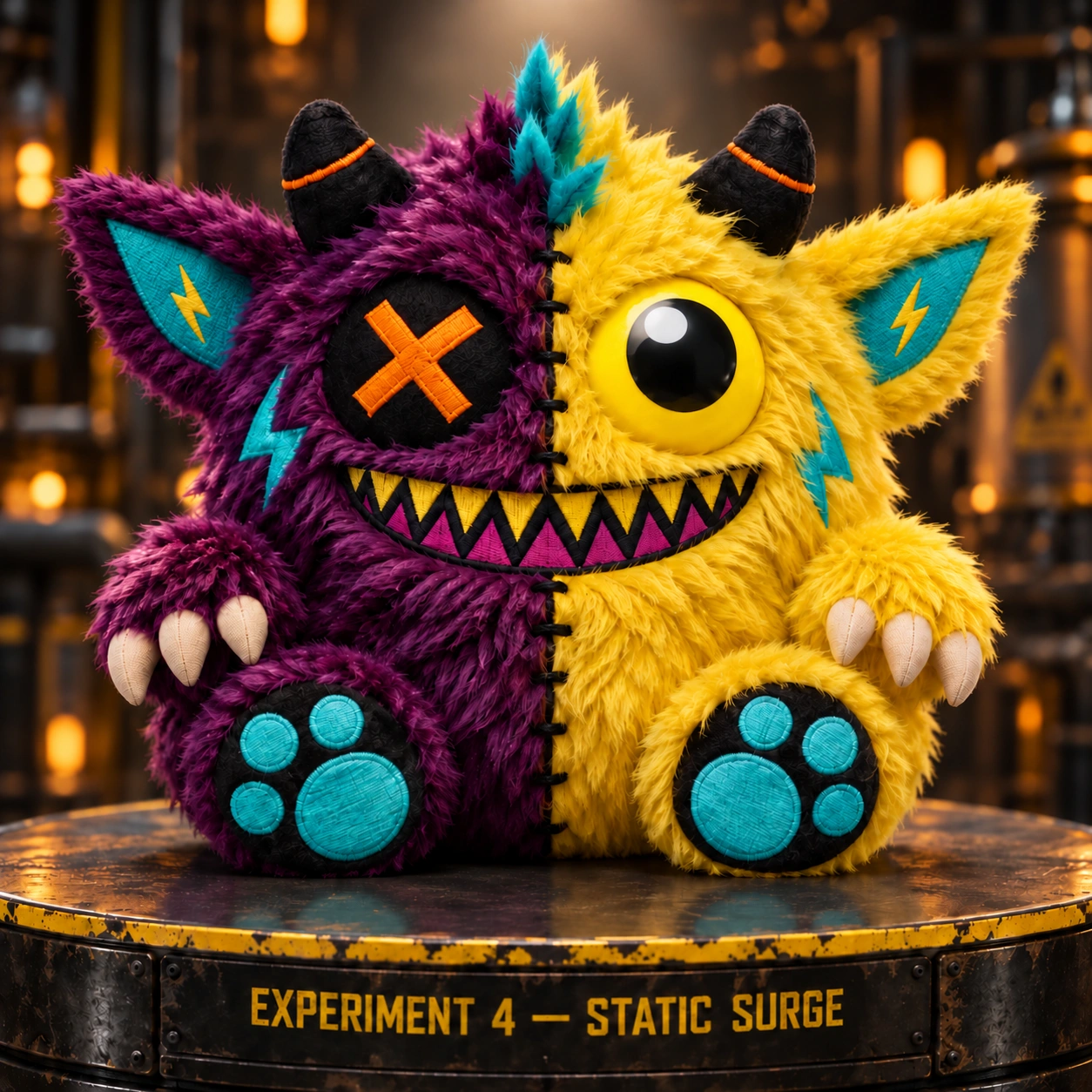
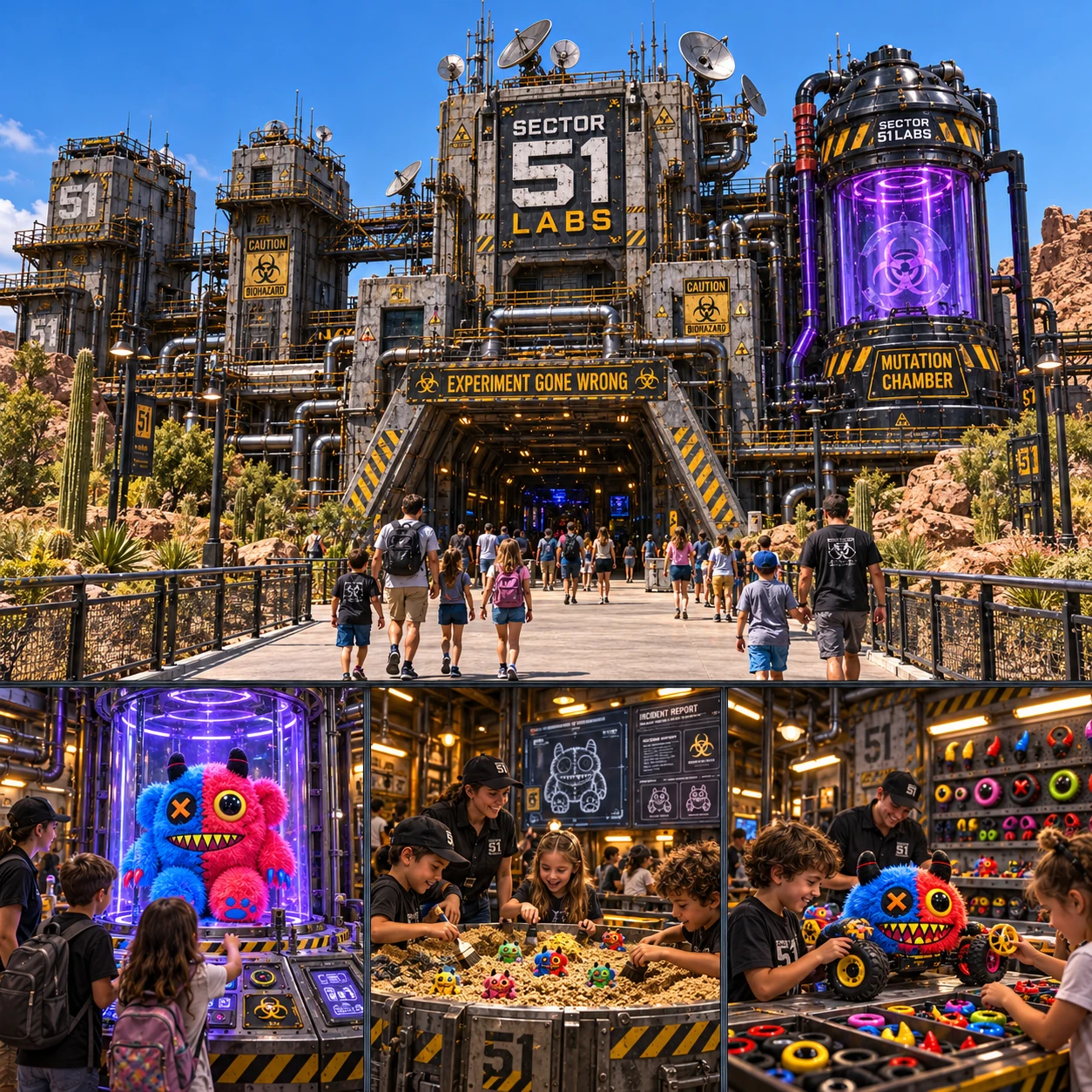
Read the story in sequence below.
01 — Sector 51 Labs
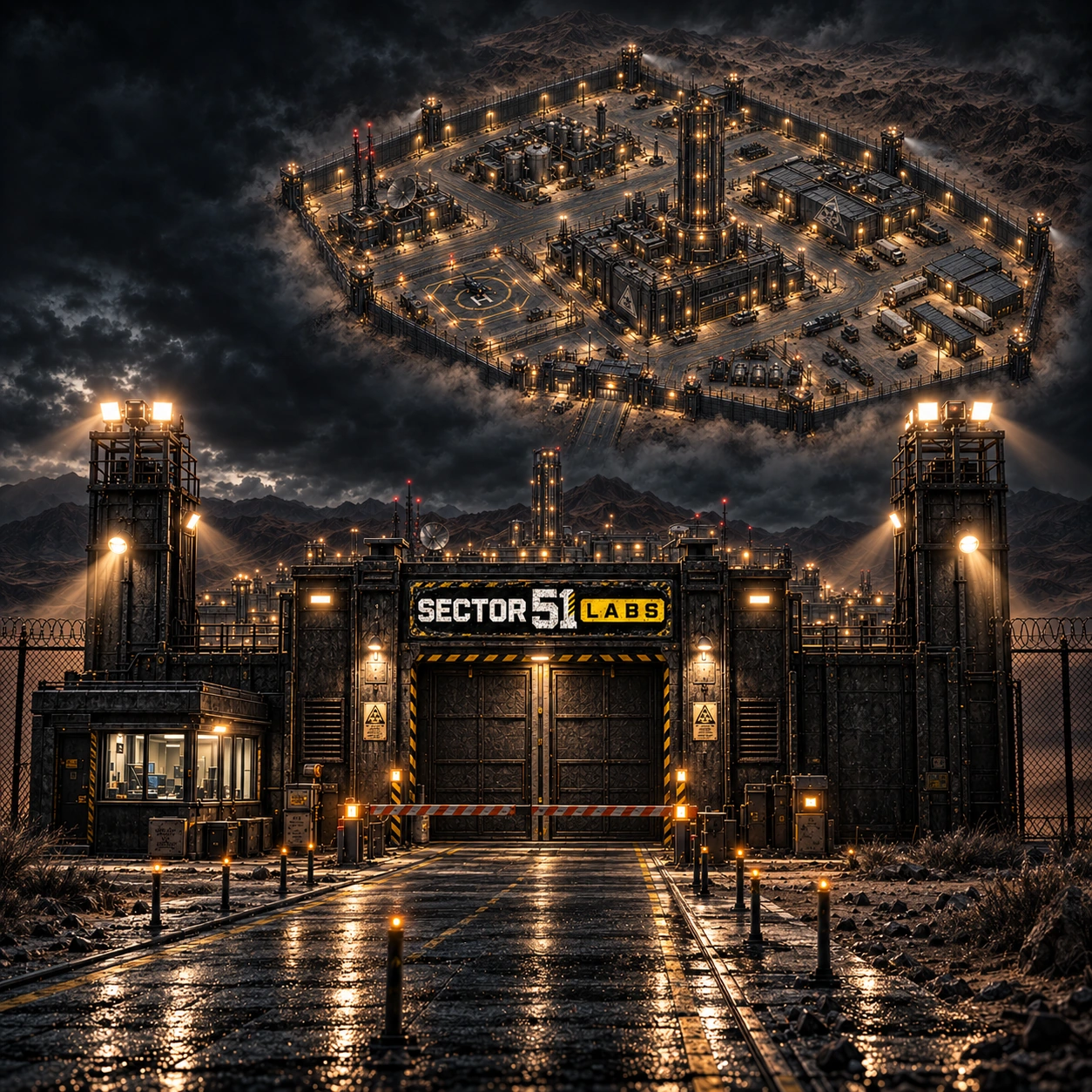
Beneath the Vaultara Desert, Sector 51 Labs investigates life that ordinary science cannot explain. Behind its sealed doors, every unknown is supposed to be studied, stabilized and contained.
Then a recovery team brings in an organism unlike anything in the database. No match. No precedent. The decision to use experimental stabilizer X-51 will expose the lab’s deepest secret and awaken something far harder to contain.
02 — Discovery
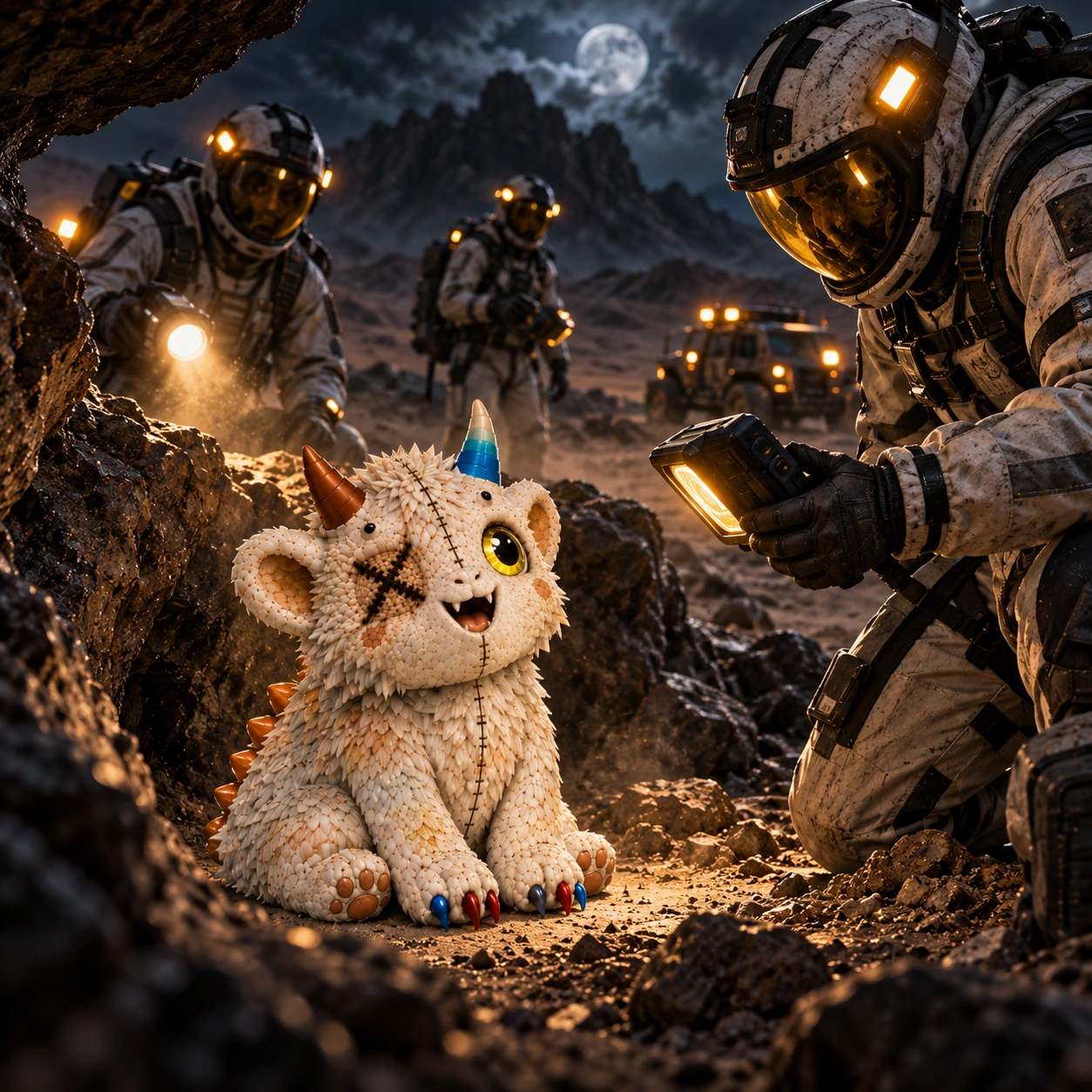
A recovery team finds a small, unfamiliar organism in the Vaultara Desert. At first glance, it looks almost harmless. Its curious face gives no hint of what is hidden inside its biology.
Back at Sector 51, the first comparisons lead nowhere. No known species shares its profile. The discovery becomes a classified case, and the specimen is moved into the lab for closer study.
03 — Classification
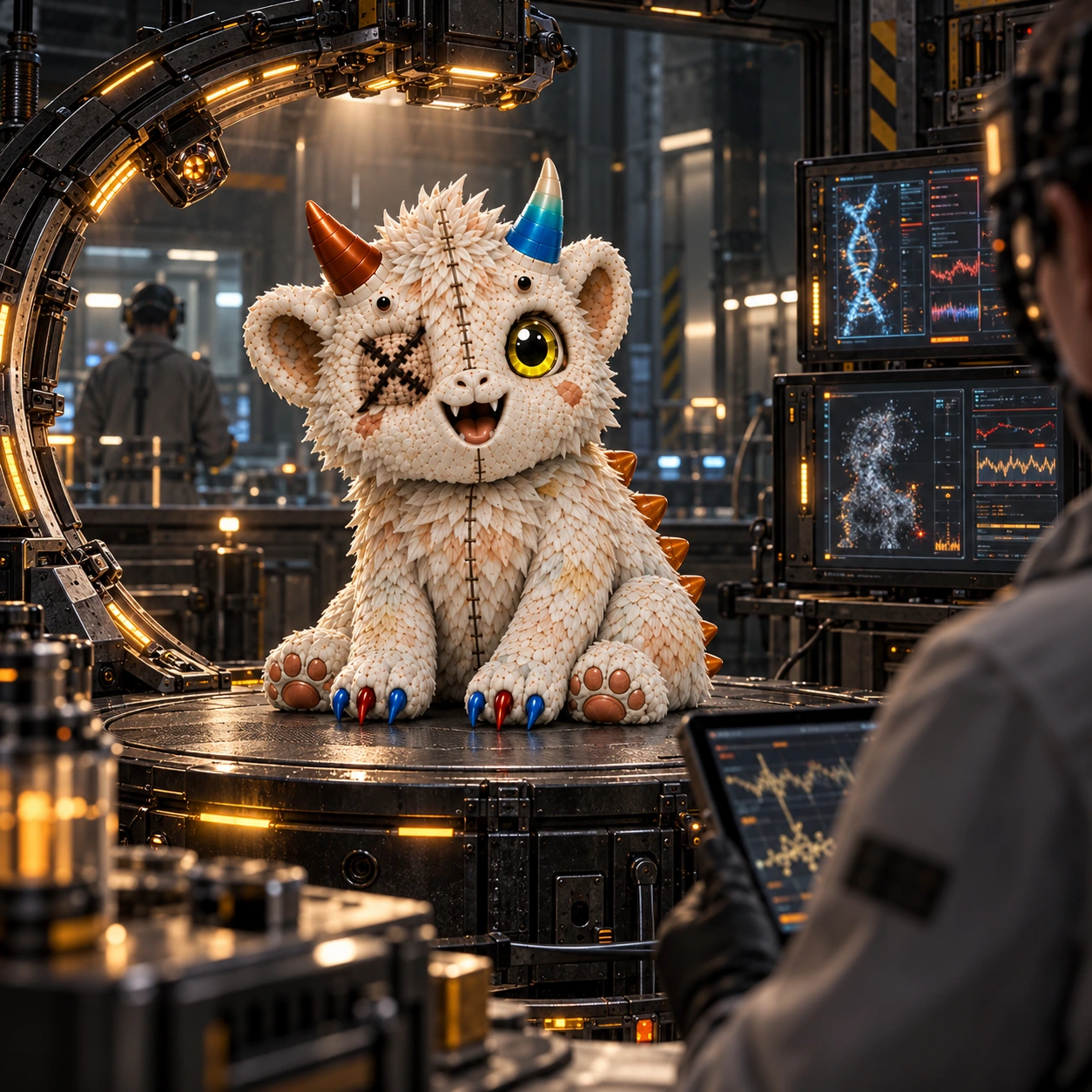
The lab checks the specimen’s DNA, anatomy and behavior. Every test reaches the same dead end: there is no reference in the database and no known biological match.
Without an established identity, the scientists cannot rely on familiar procedures. The specimen receives the only designation they can justify: Unknown. Its unusual traits become the focus of a research project with no precedent.
04 — Research board decision
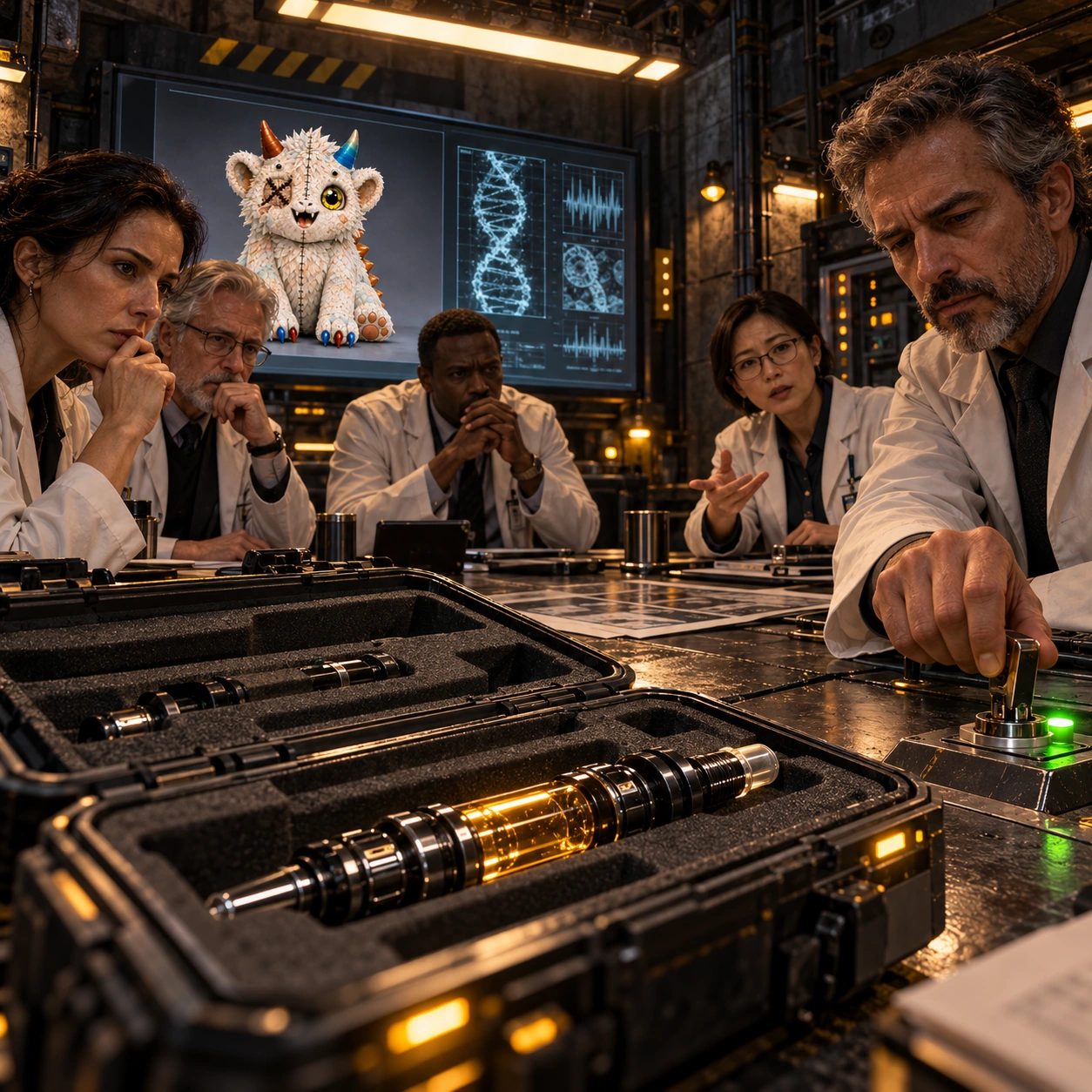
Standard protocol cannot be applied to an unknown specimen. The research board considers an experimental alternative: X-51, a stabilizer containing a specialized bio-reactive agent.
No unknown organism has ever been recovered, so X-51 has never been tested. The board weighs an unproven treatment against the risks of inaction and approves the injection. It is the decision that will change everything inside Sector 51.
05 — X-51 deployment
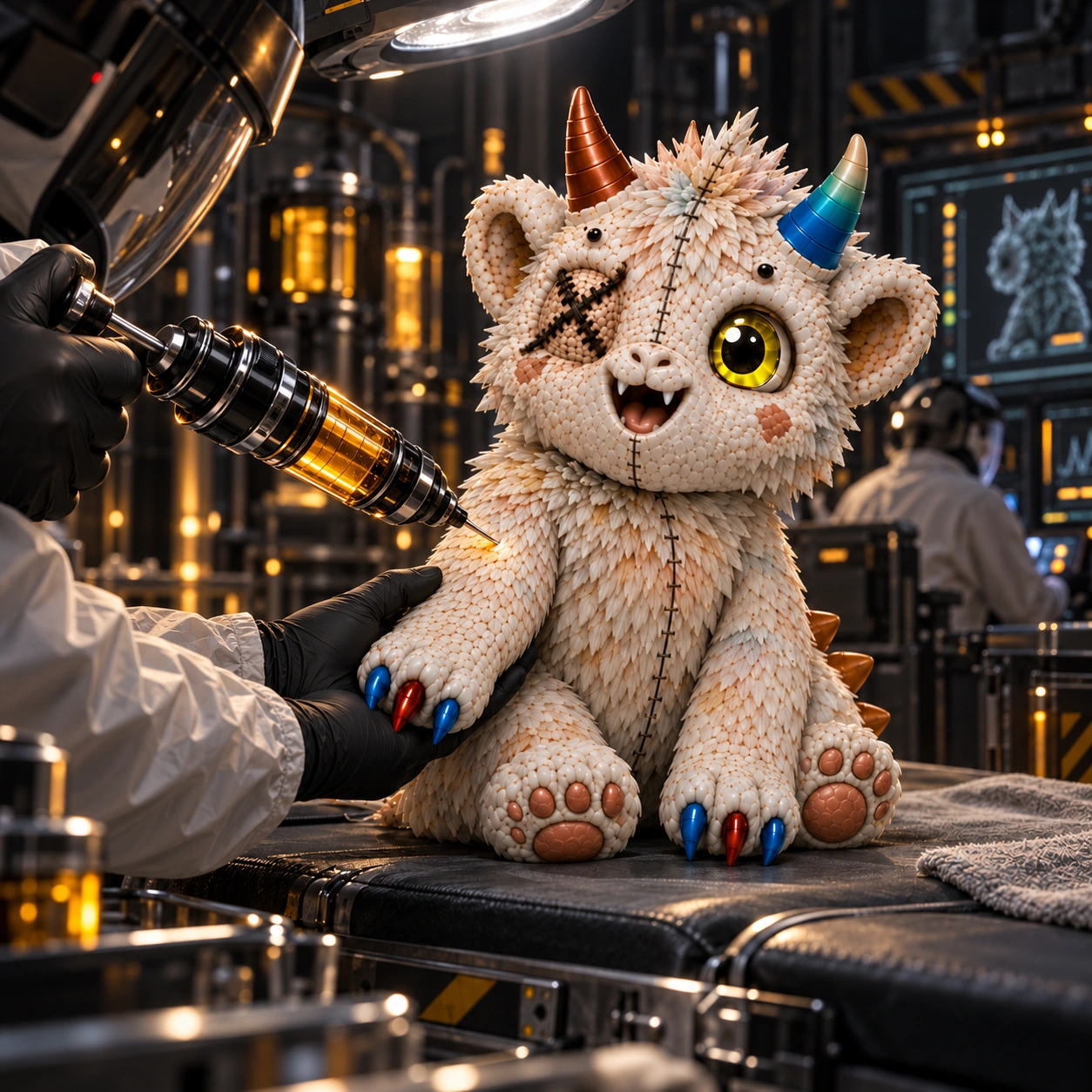
Under controlled laboratory conditions, X-51 is injected into the specimen. The team’s aim is straightforward: stabilize its biology, keep it contained and observe its response.
Every part of the procedure is built around containment. The scientists are preparing to understand a new organism, with no reason yet to expect a new kind of chaos. The experiment has begun; the outcome is still unknown.
06 — Unexpected response
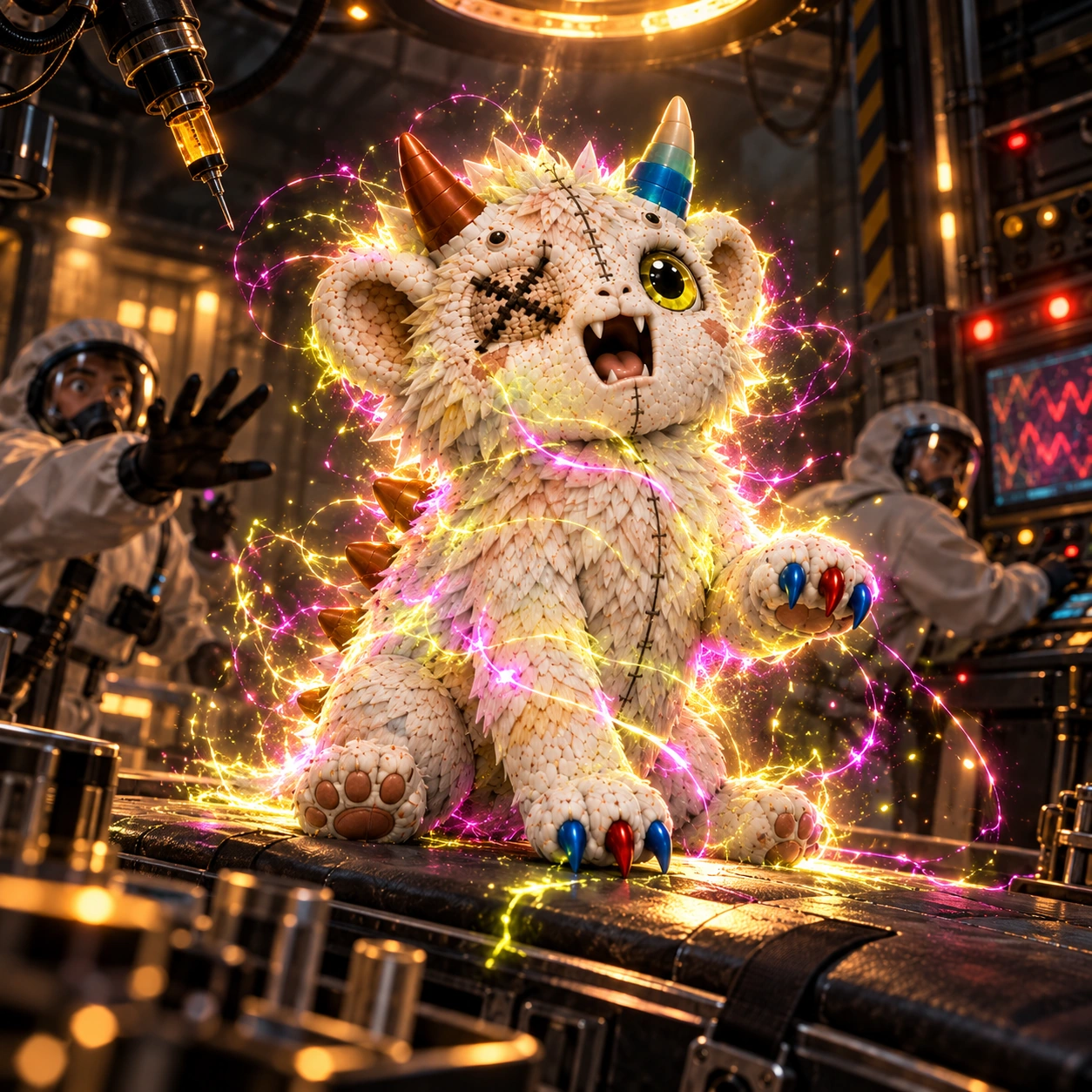
The response is immediate, but it is not the stabilization the scientists expected. Dormant genetic pathways activate, and the specimen’s biology begins to reveal something that had been hidden all along.
X-51 has not created a new creature. It has awakened what the specimen was always destined to become. The lab is now observing a transformation its protocol was never designed to contain.
07 — Transformation
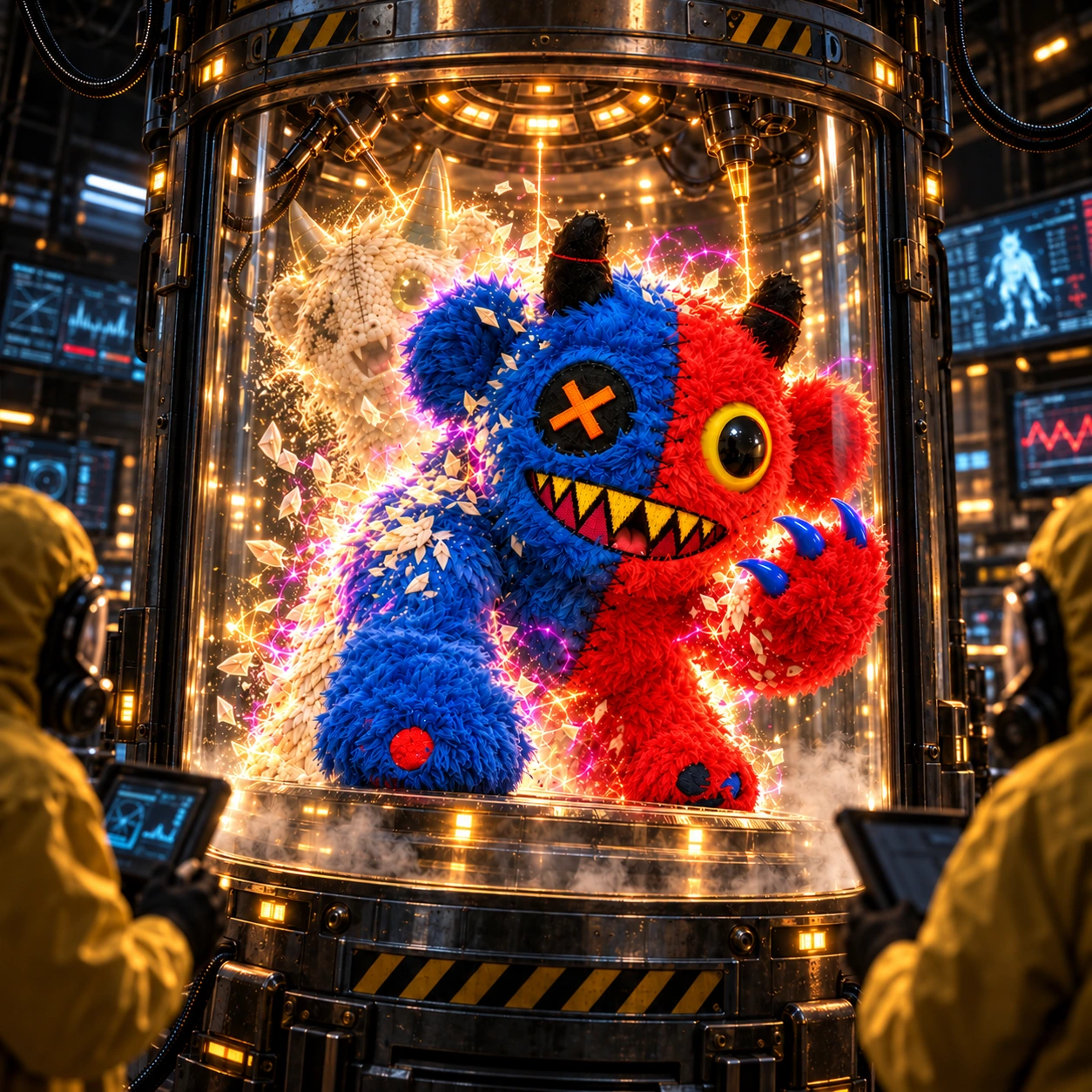
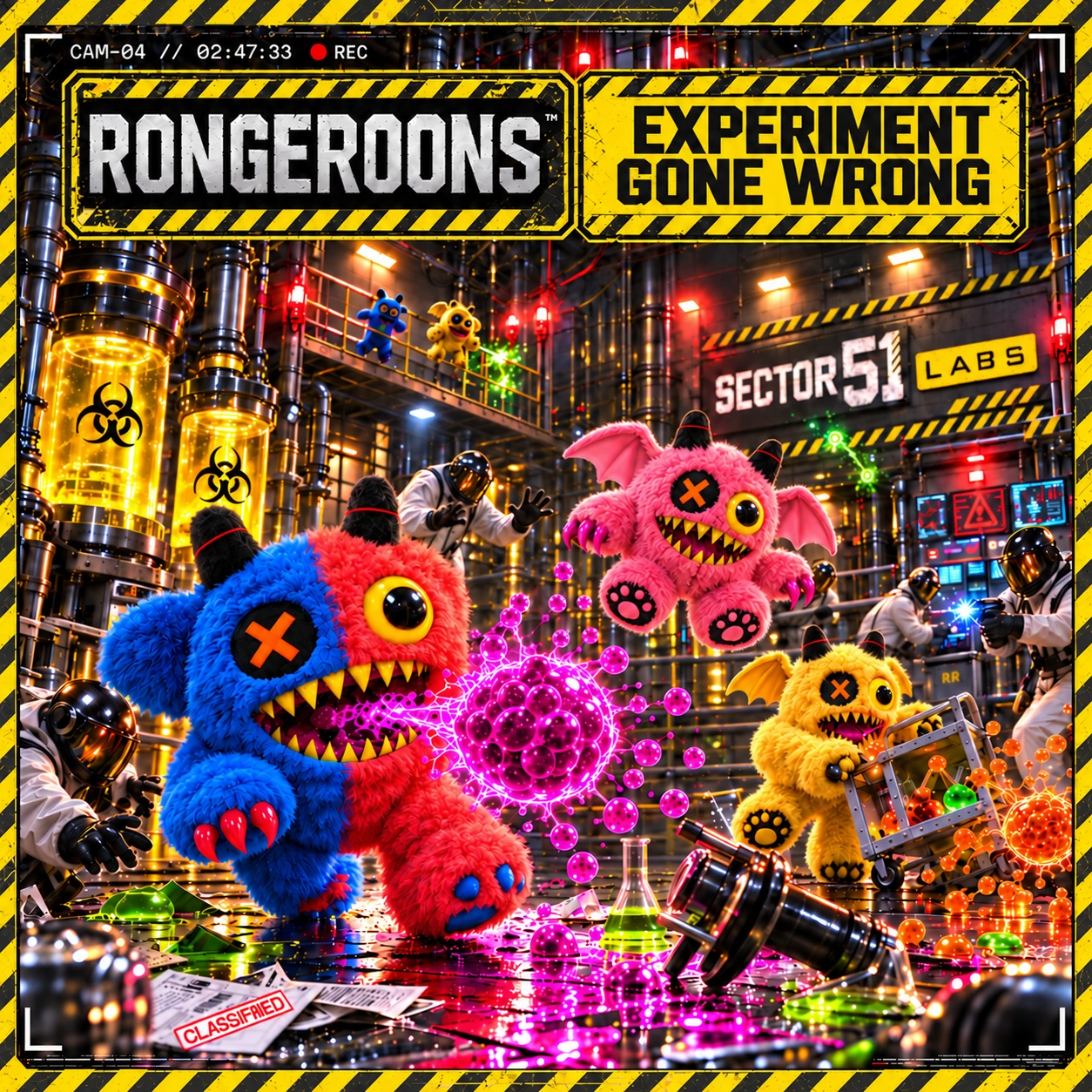
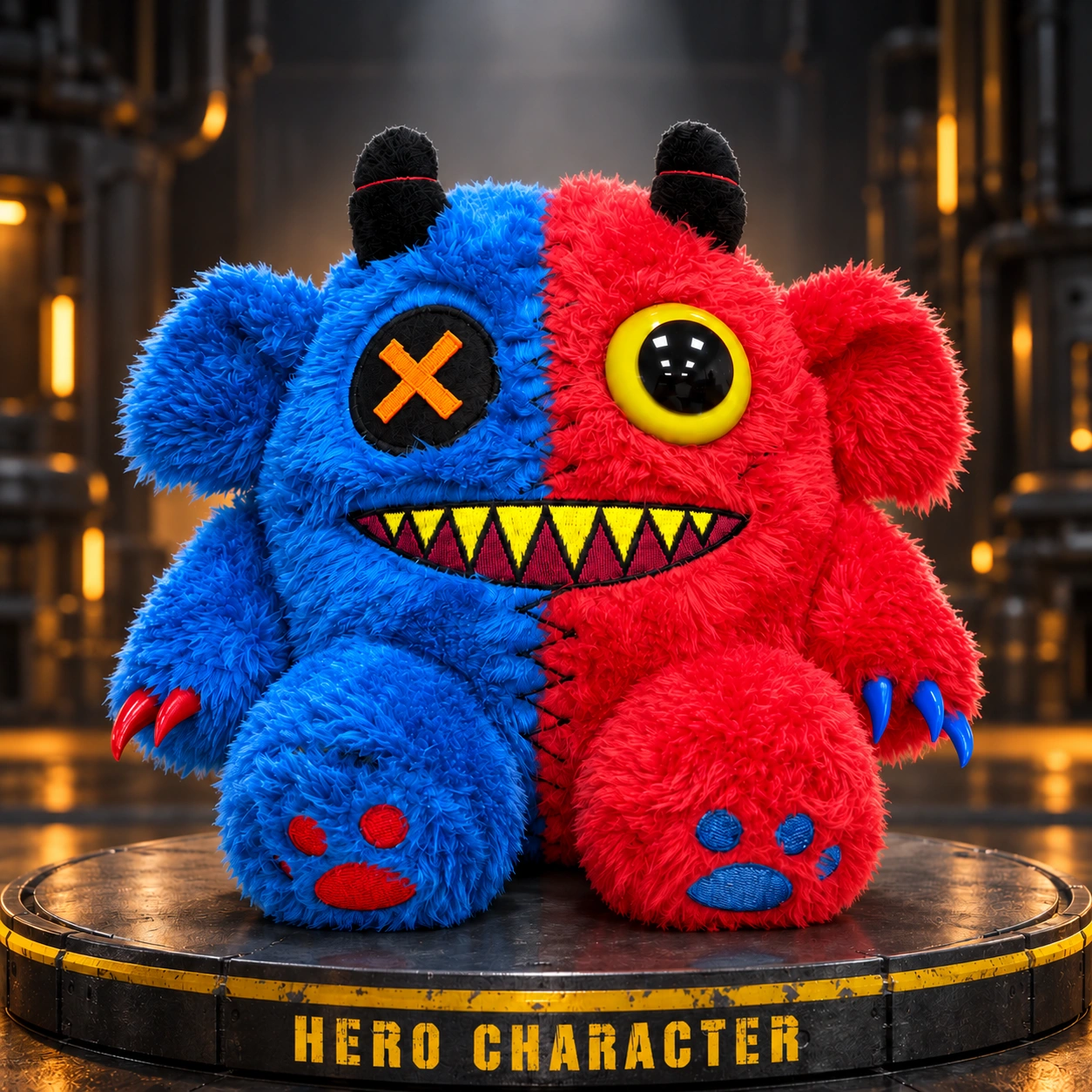
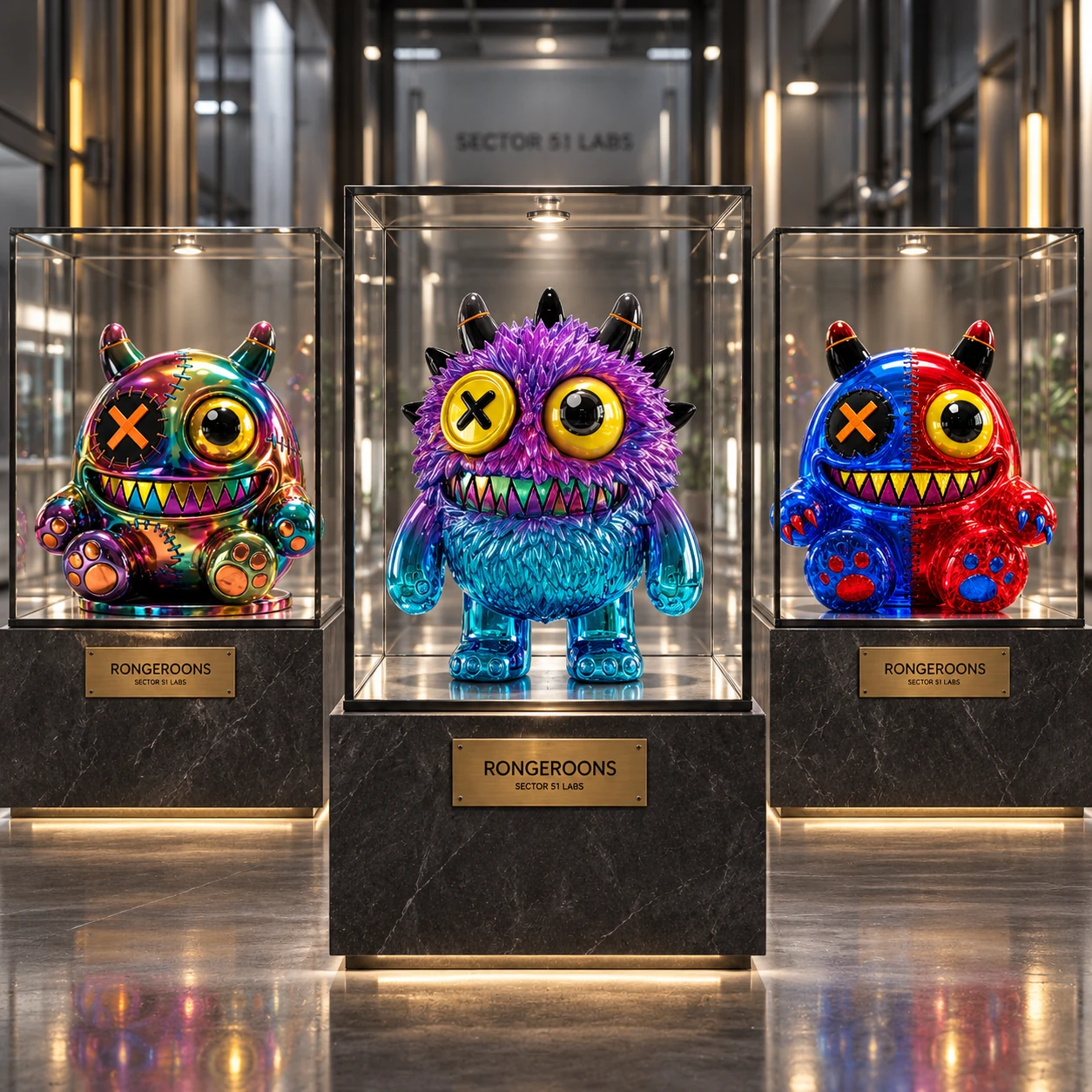
The original specimen permanently mutates into the first Rongeroon. Its familiar eyes, horns, claws, paws and dorsal spikes remain, but the creature’s awakened form is unmistakably different.
A bold blue-and-red coat and a grin full of fangs announce the change. This form is chaotic by nature, driven to spread disorder and havoc. The cute discovery was only the beginning of what Sector 51 had brought inside.
08 — Replication
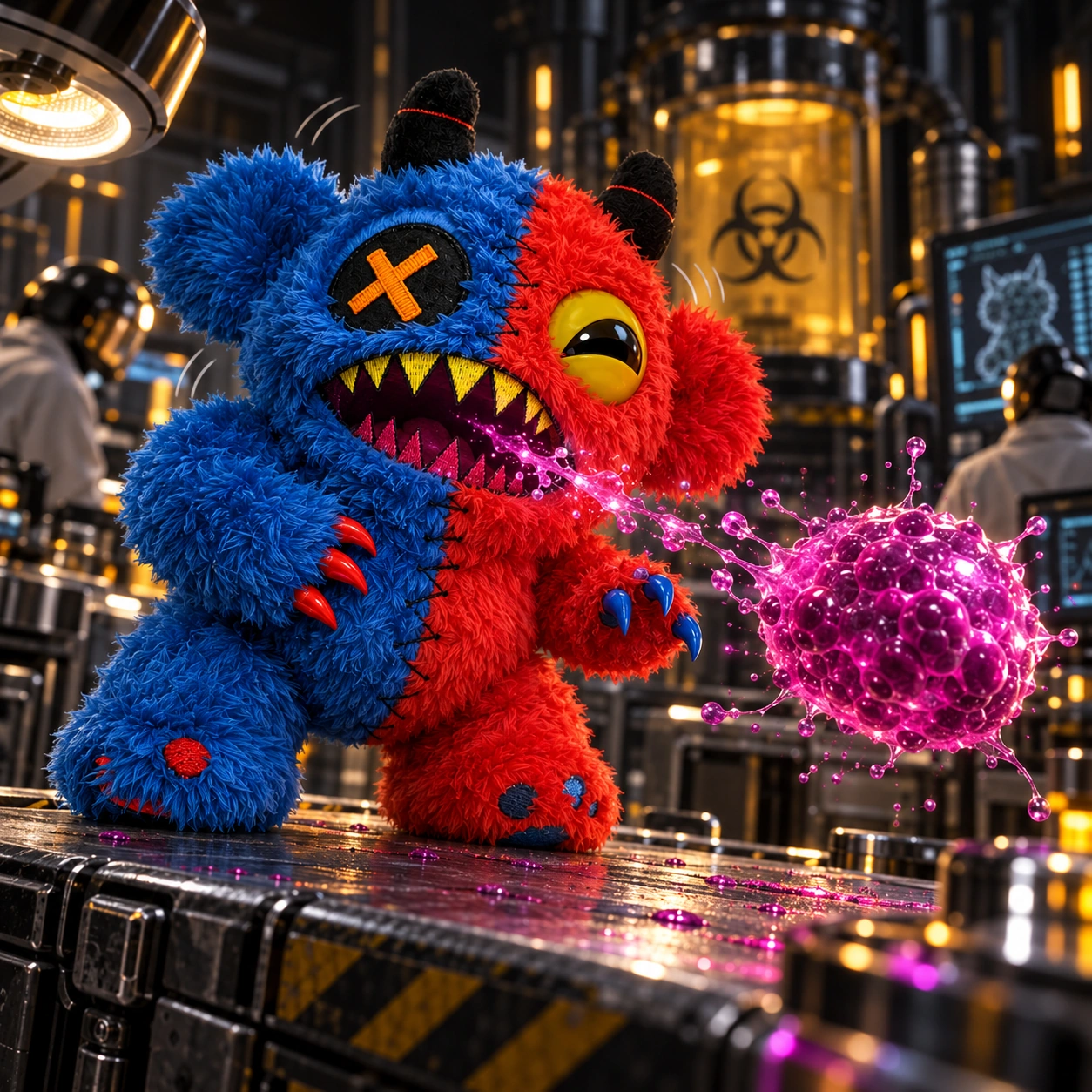
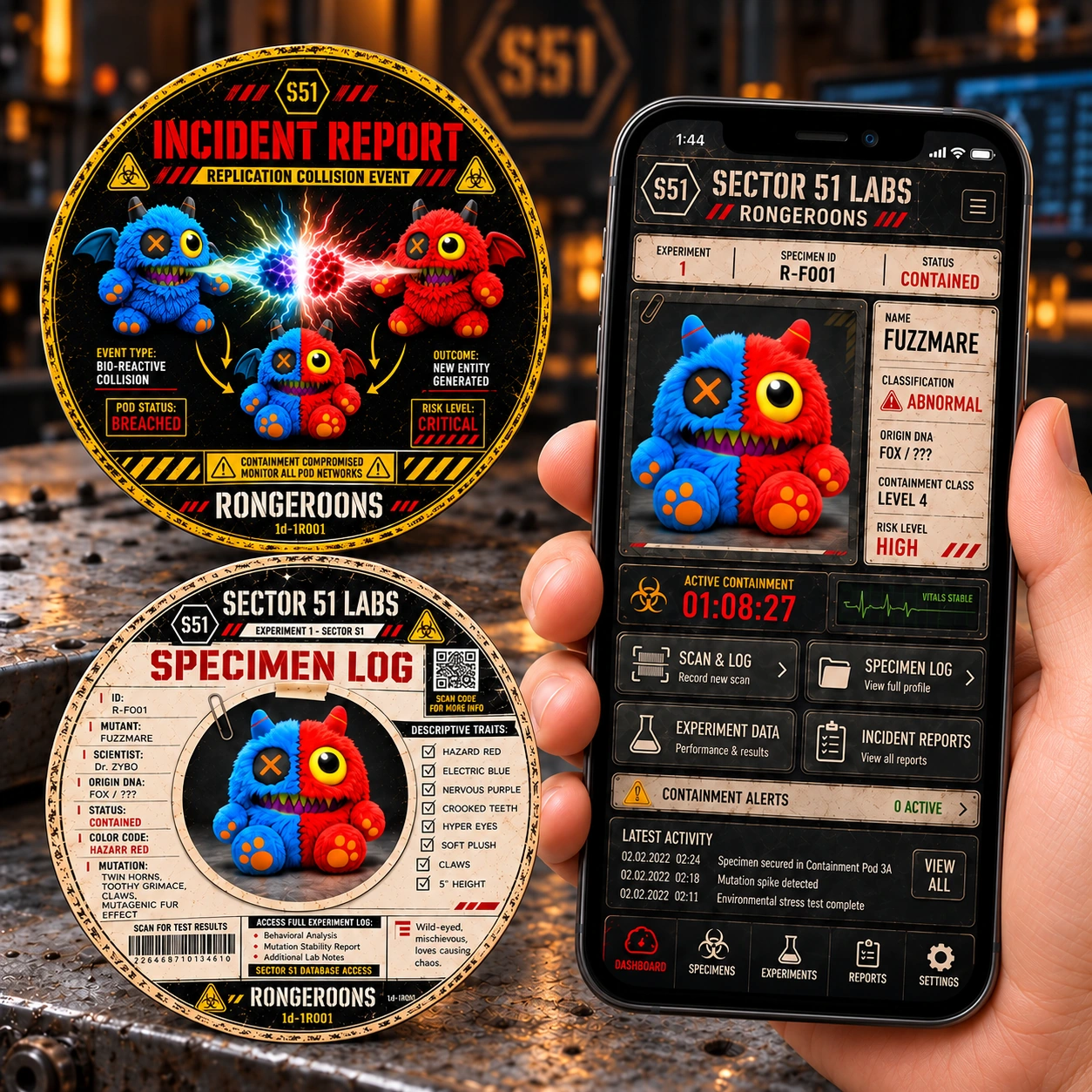
A sudden, violent hiccup changes the experiment again. The Rongeroon involuntarily expels a glowing bio-reactive mass, leaving the researchers with another unknown to understand.
It is not an egg, and the hiccup is no ordinary reflex. The mass is active: a new lifeform is about to emerge. What began as the study of one specimen is becoming a problem that can multiply.
09 — New lifeform formation
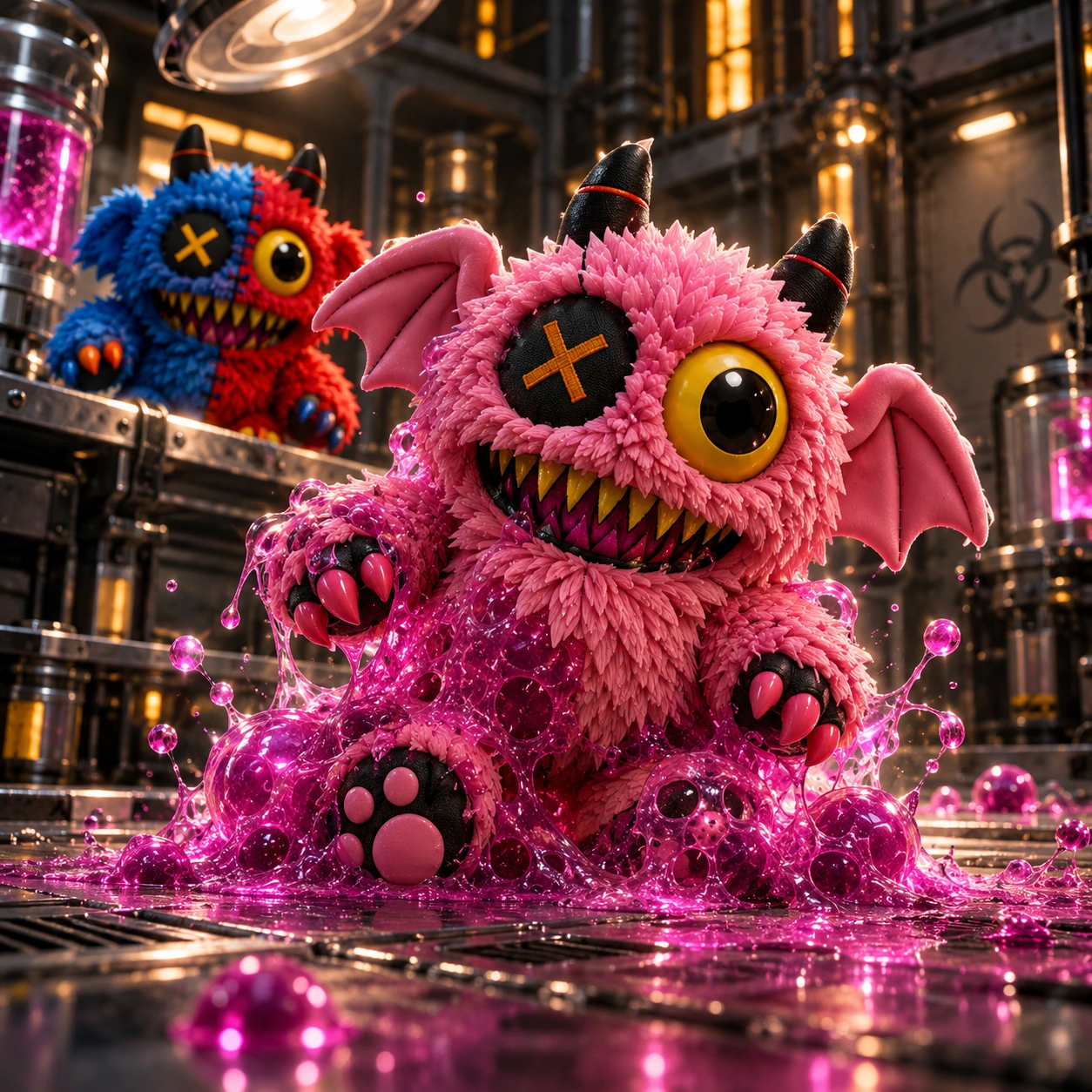
The expelled bio-reactive mass begins to restructure. What looked like a strange burst from the first subject takes on a form of its own, and a new Rongeroon entity is born.
A second creature now stands inside the lab. The discovery proves that the first hiccup was more than a reaction to X-51: it was the beginning of replication. One contained specimen has become two.
10 — Breakdown
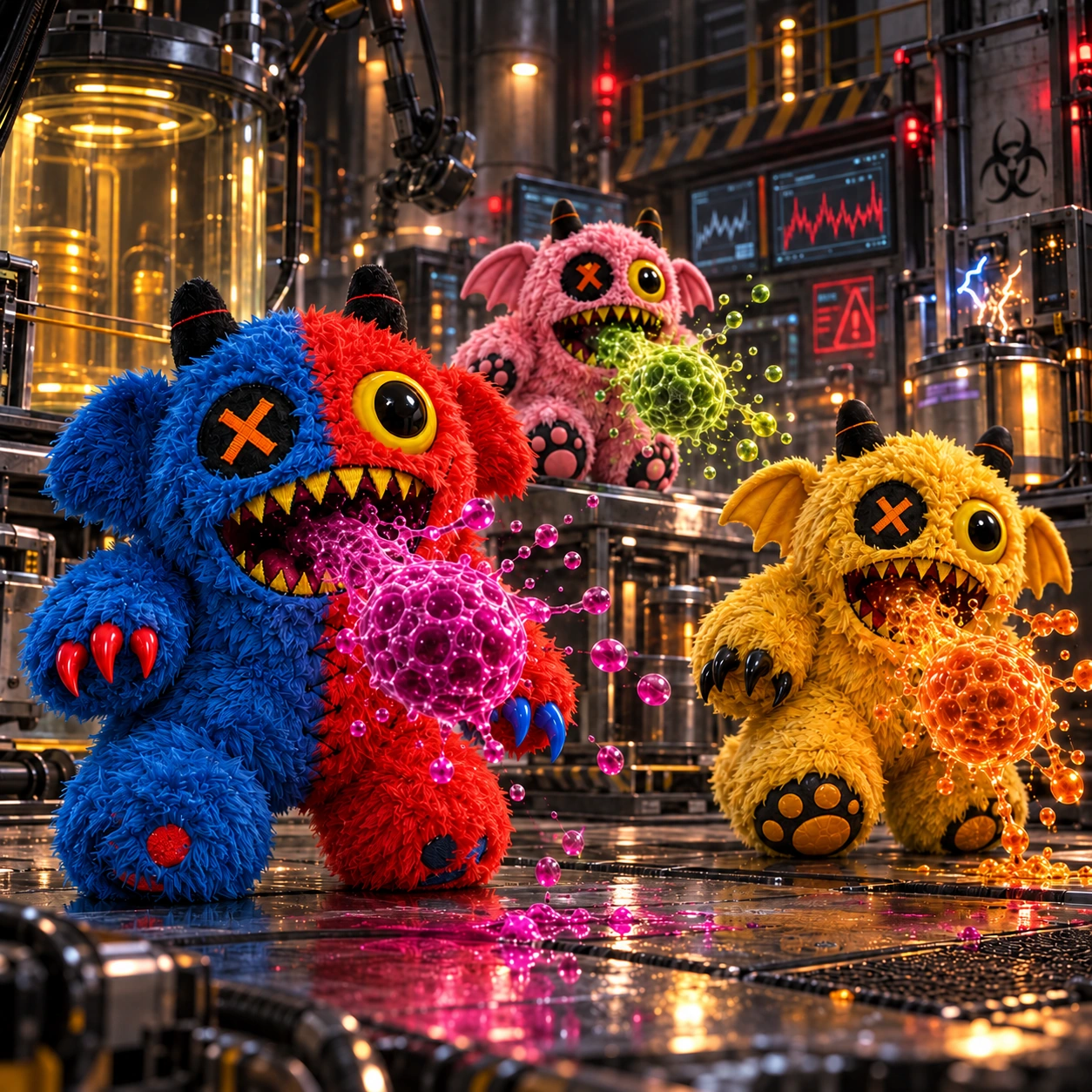
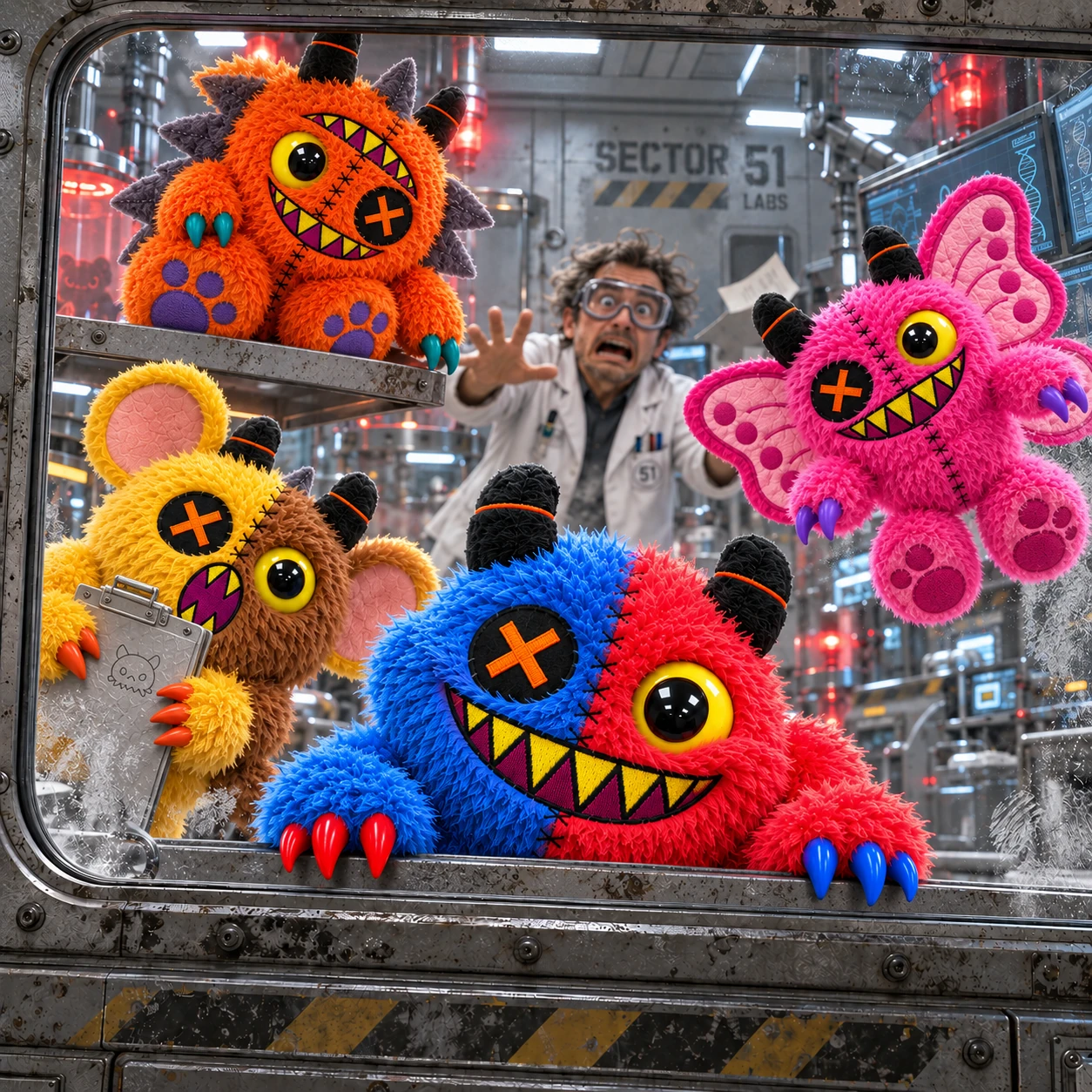
As Rongeroons gather, group instability triggers simultaneous hiccups. Each burst releases more bio-reactive material, and new creatures begin forming faster than the lab can manage.
Every emerging Rongeroon carries a unique DNA. The population is growing and changing at the same time. Containment procedures built for a single unknown organism are overwhelmed by an expanding group of unpredictable subjects.
11 — Lab lockdown
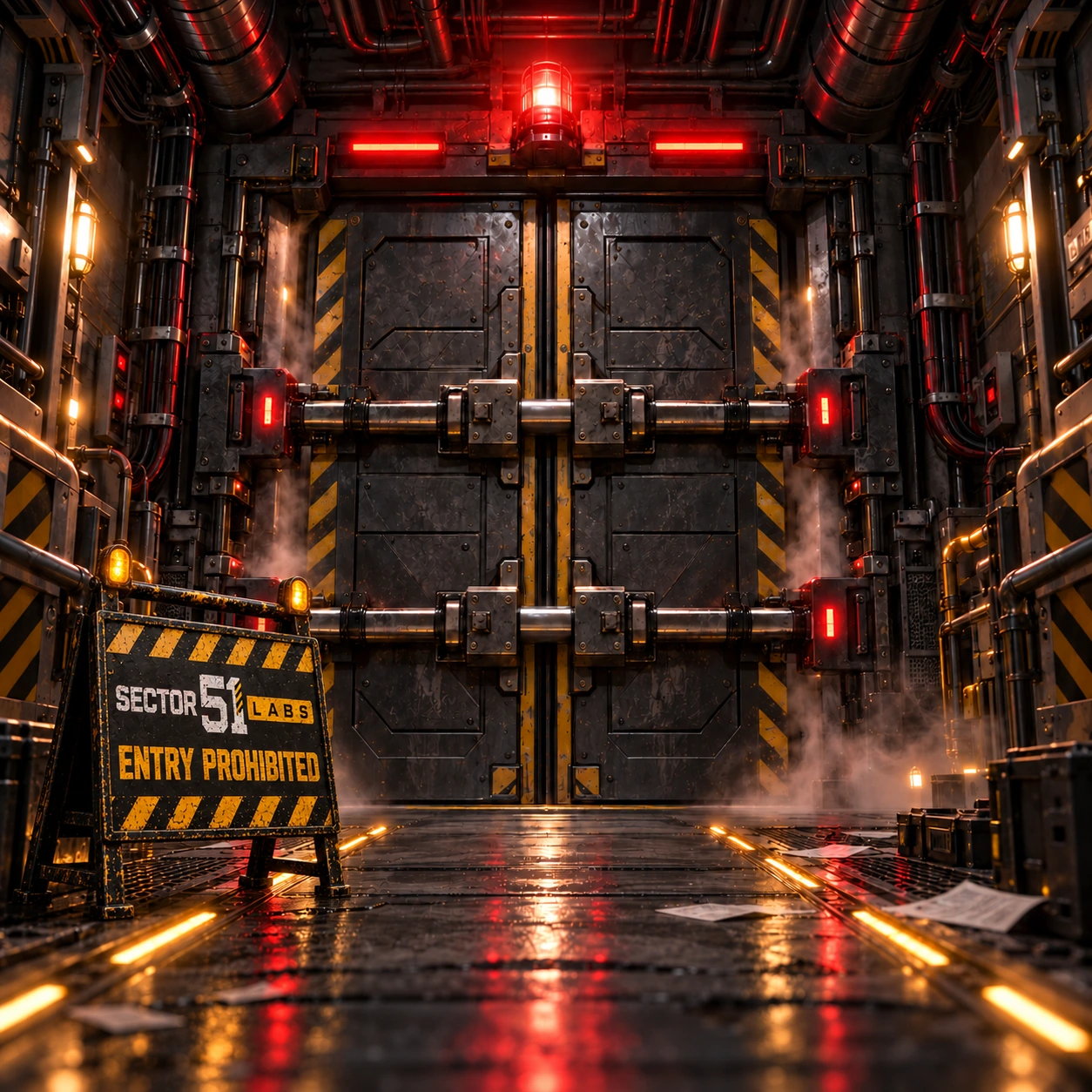
Red warning lights replace the routine lab signals. With a breach underway and Rongeroons spreading rapidly, Sector 51 is placed under lockdown. Access closes, and containment becomes the priority.
But sealing the doors cannot undo what is already happening inside. The creatures are still gathering, hiccuping and replicating. The facility built to study the unknown has become the center of an incident it can no longer keep under control.
12 — Behavioral testing
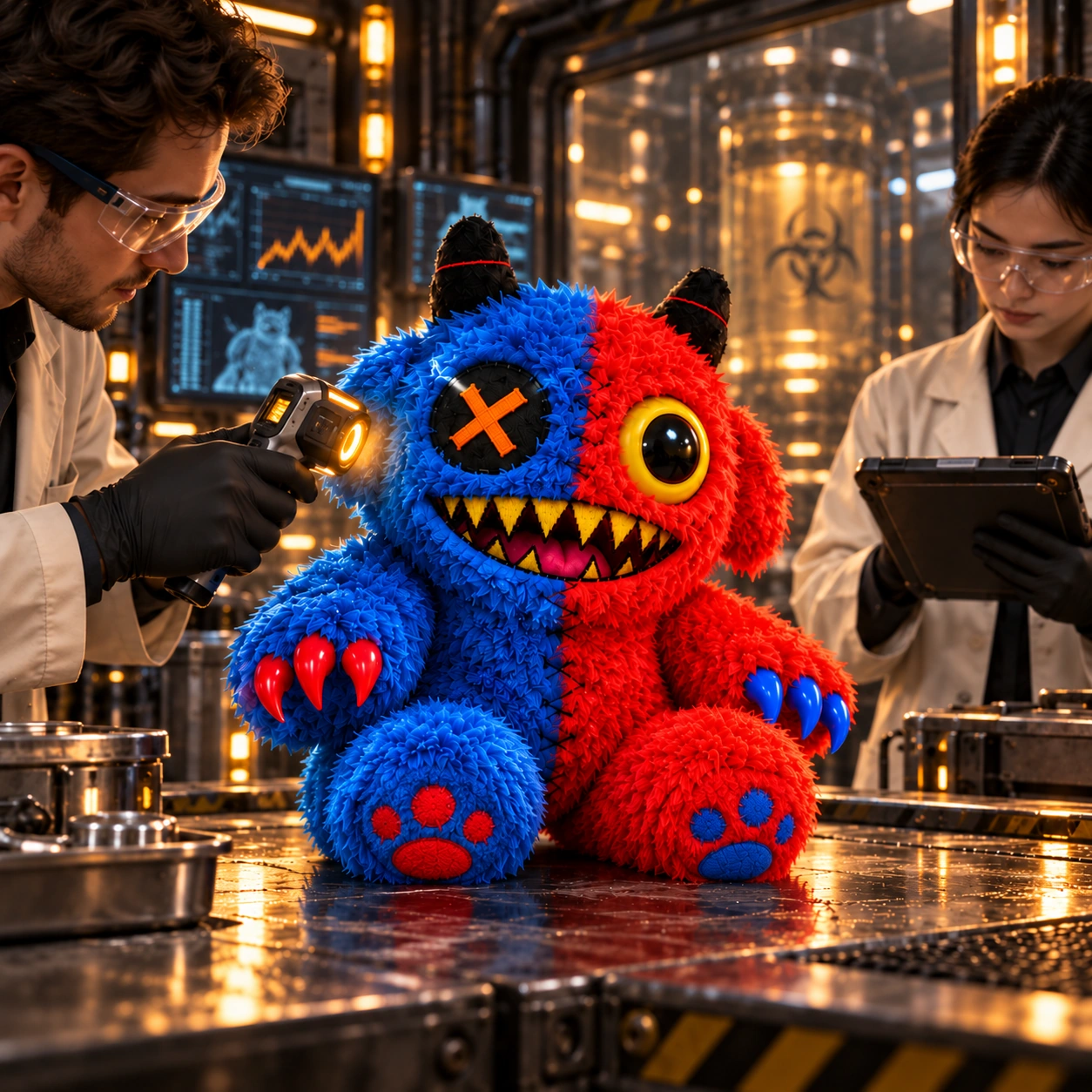
Testing one Rongeroon at a time reveals a crucial difference. Under isolation, a single subject remains manageable. The researchers can observe its behavior without triggering the instability seen in groups.
The rule becomes clear: a Rongeroon is chaotic by nature, but alone it can be controlled. Together, the creatures become impossible to manage. Individual handling will have to be the foundation of any response.
13 — Board resolution

Rongeroons spread through vents, pipes and hidden service systems. The breach has reached places that ordinary containment cannot easily access, and there is no reliable way to stop replication.
Before the facility collapses completely, the board approves relocation to the outer world. The subjects must leave Sector 51 individually. The decision saves a path forward, but it also exposes the lab’s secrets beyond its gates.
14 — Pod deployment
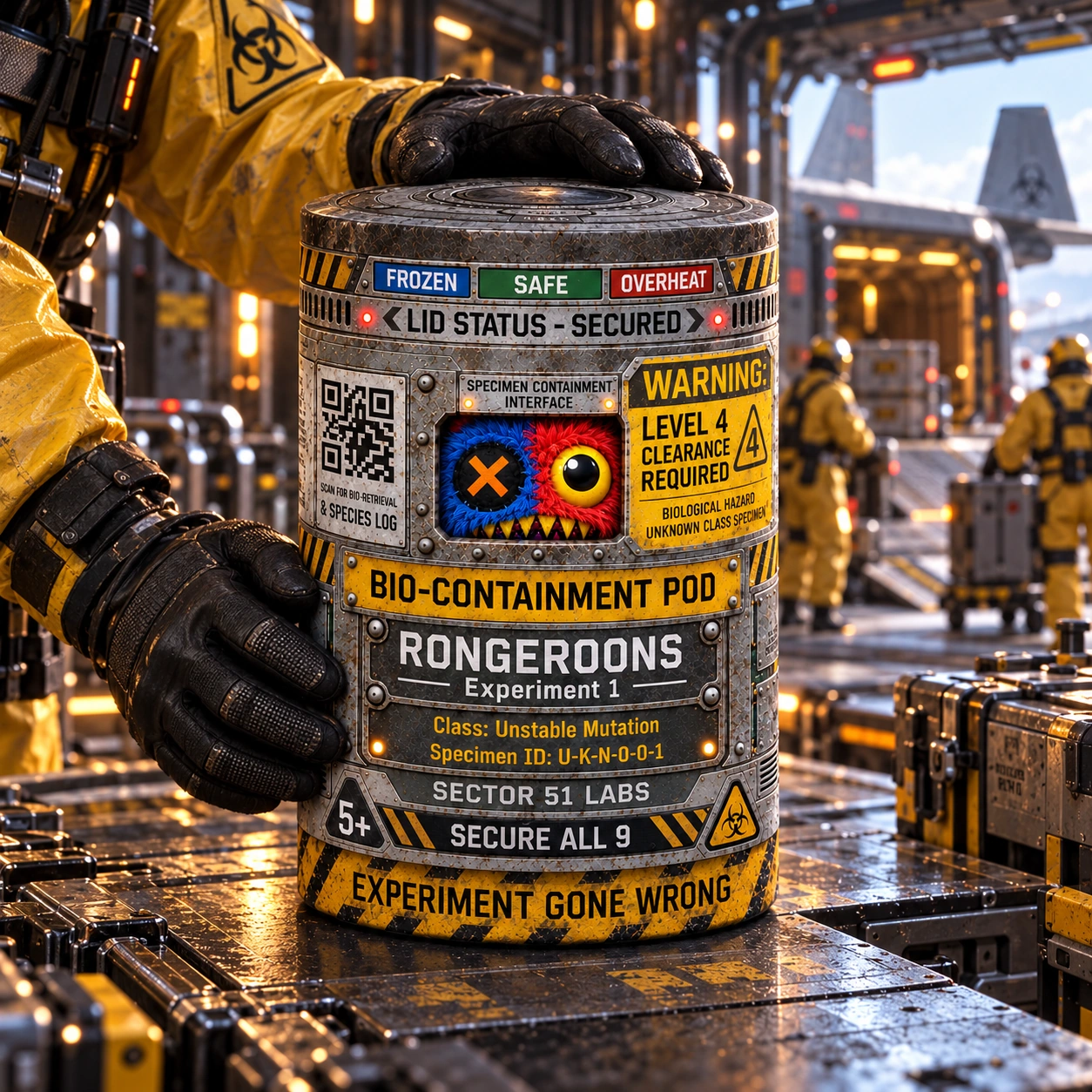
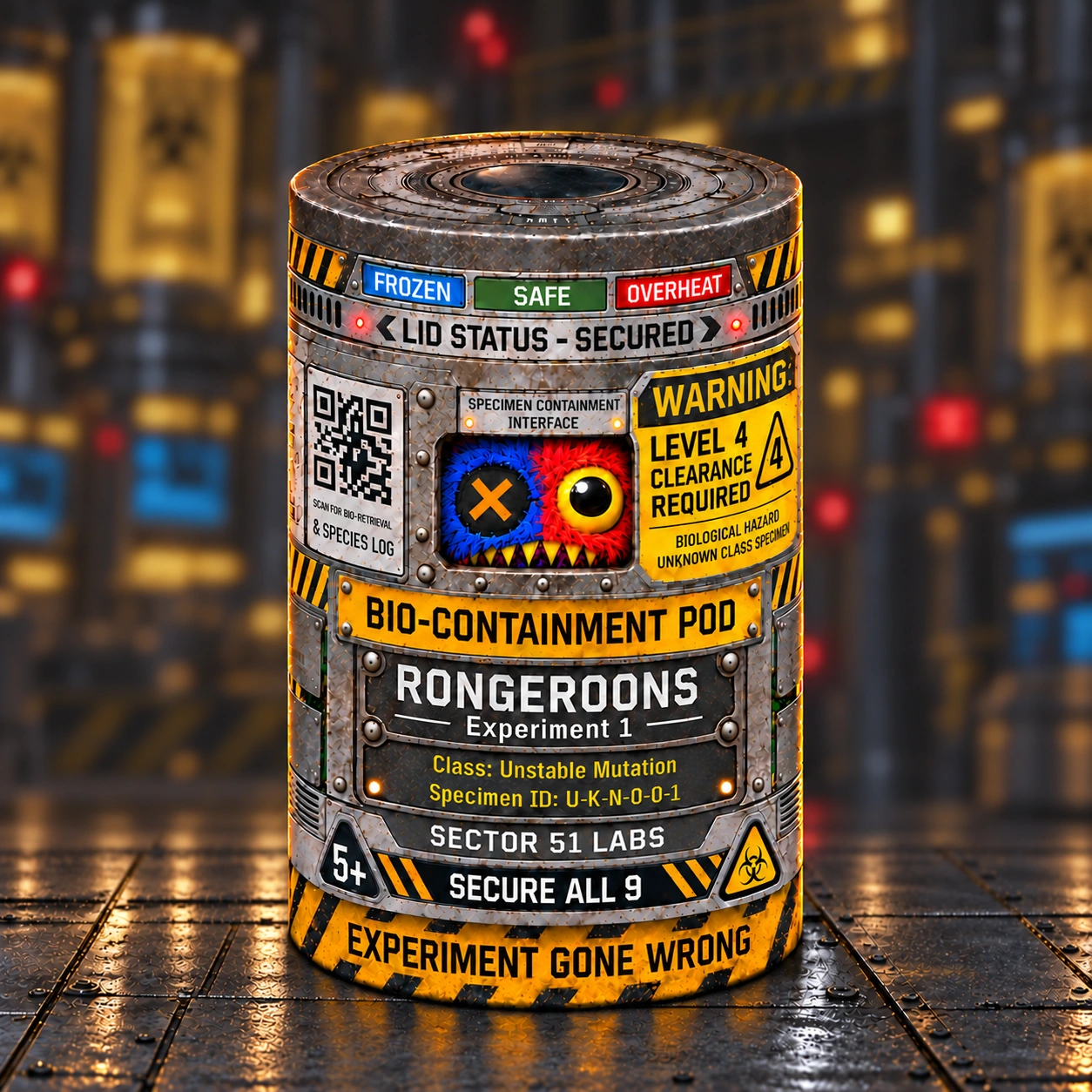
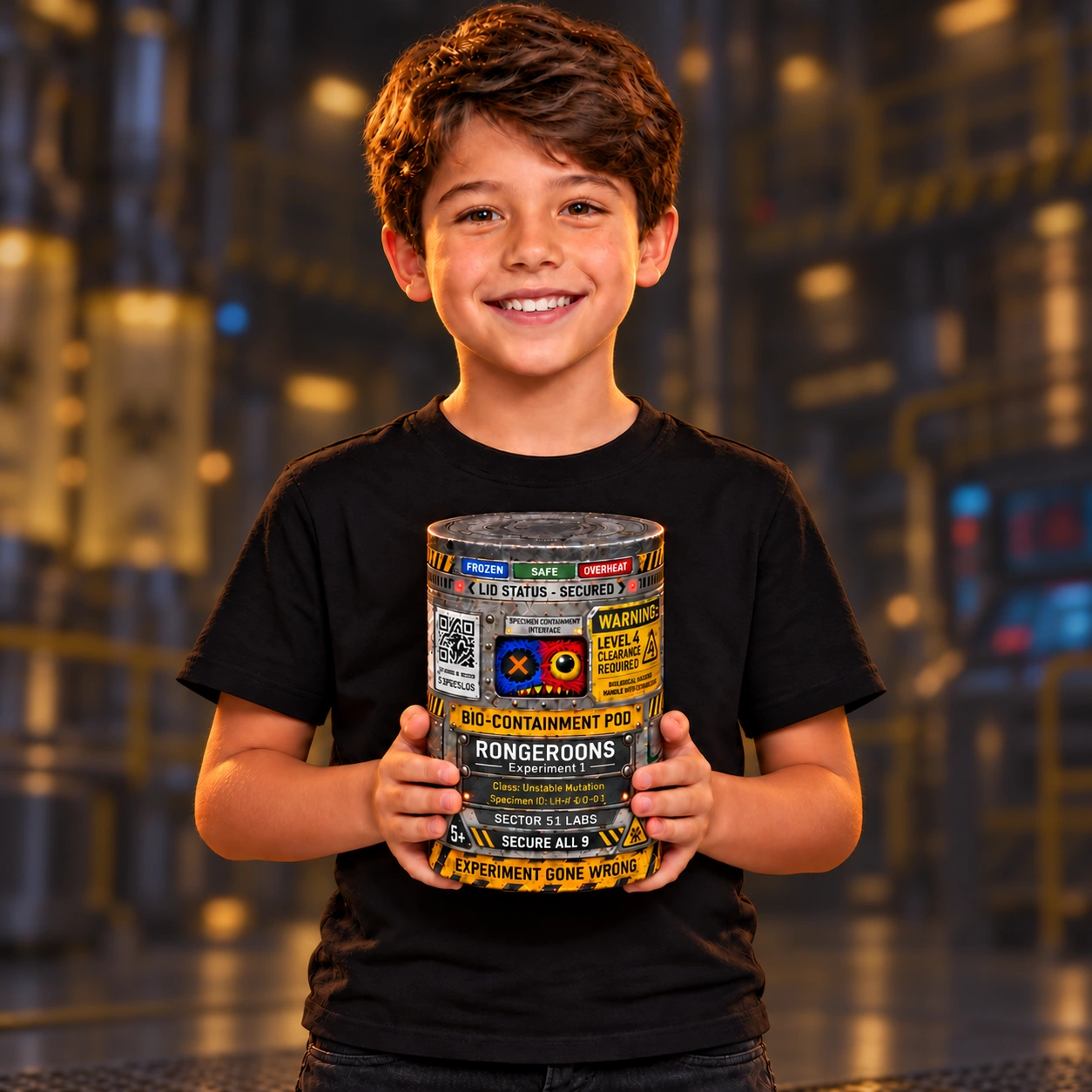
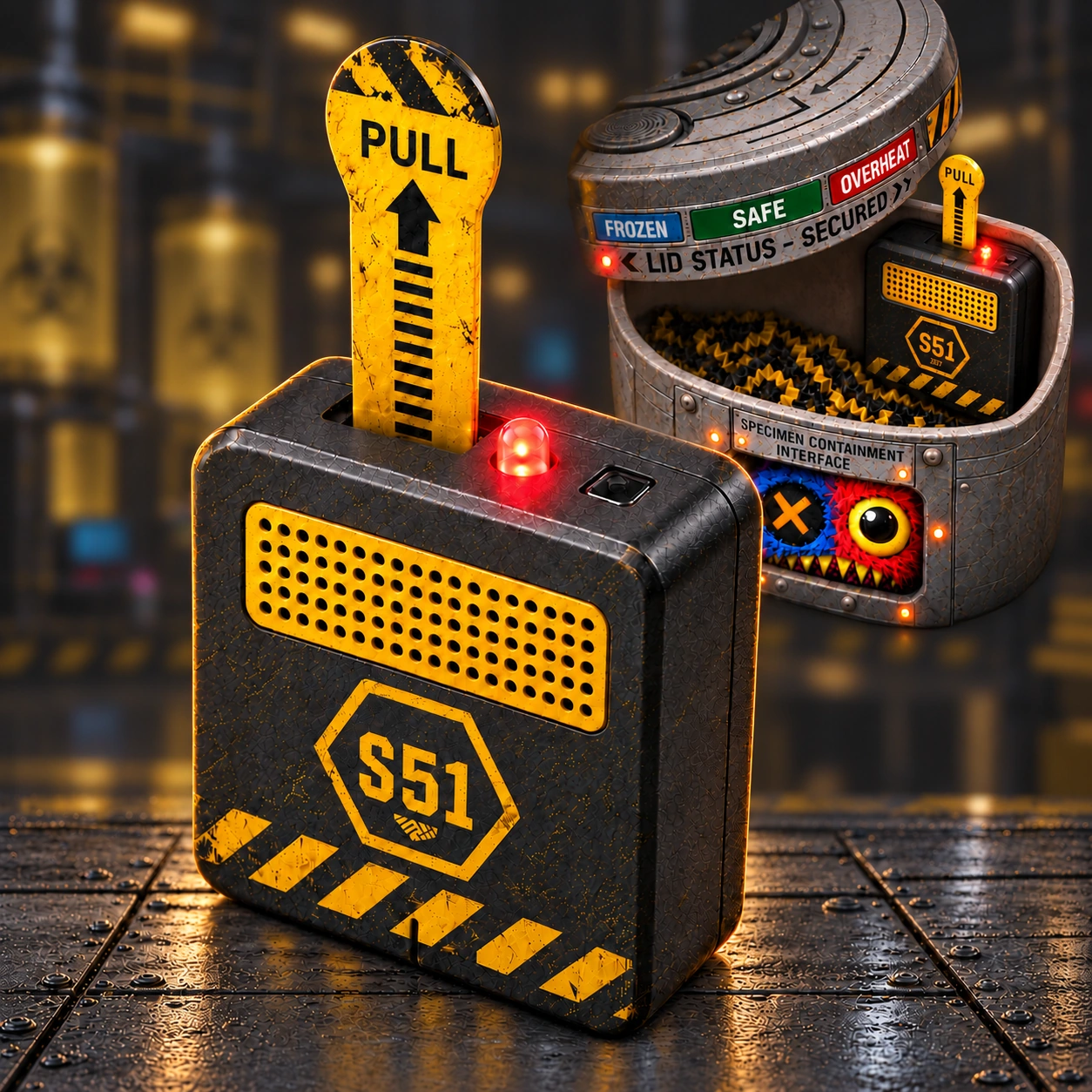
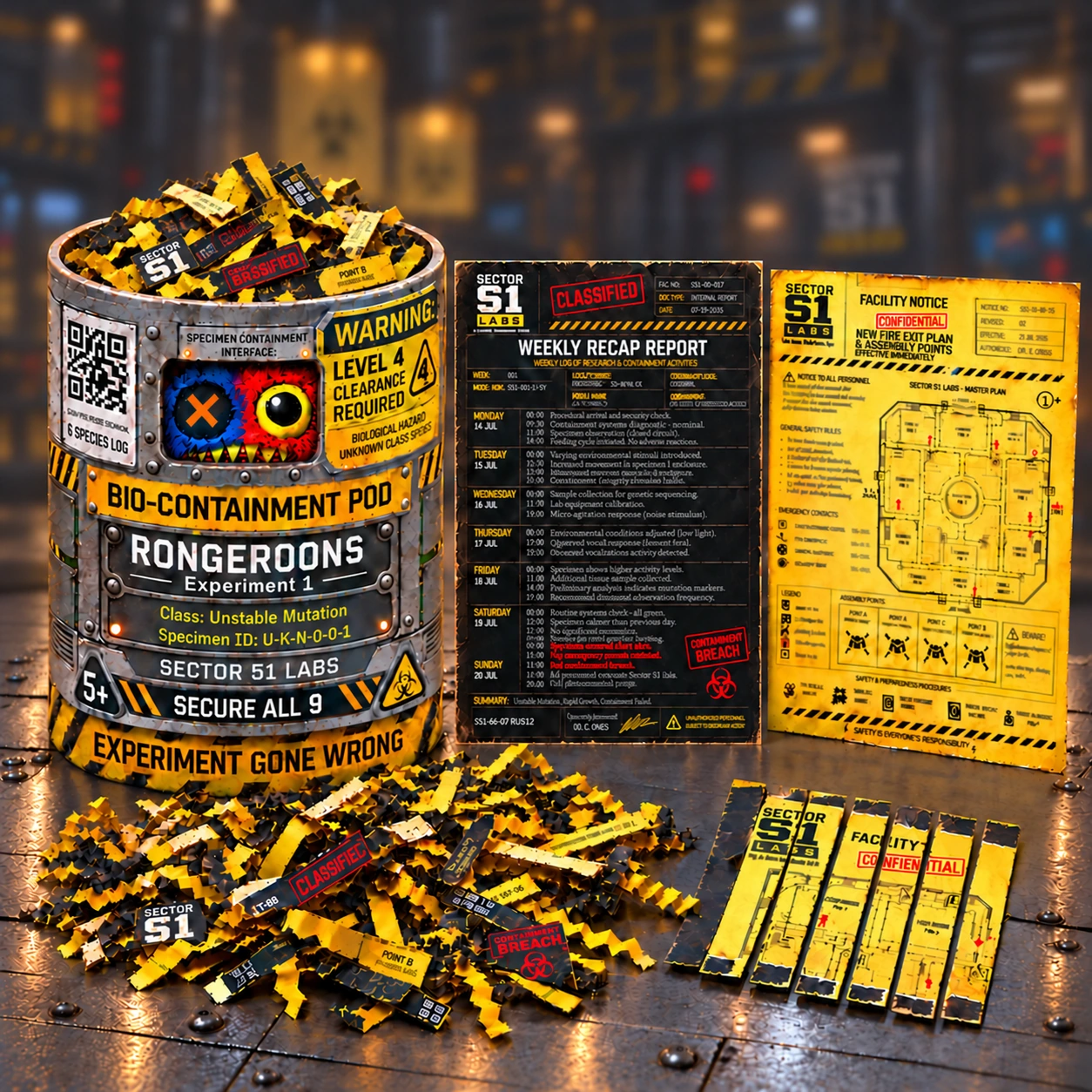
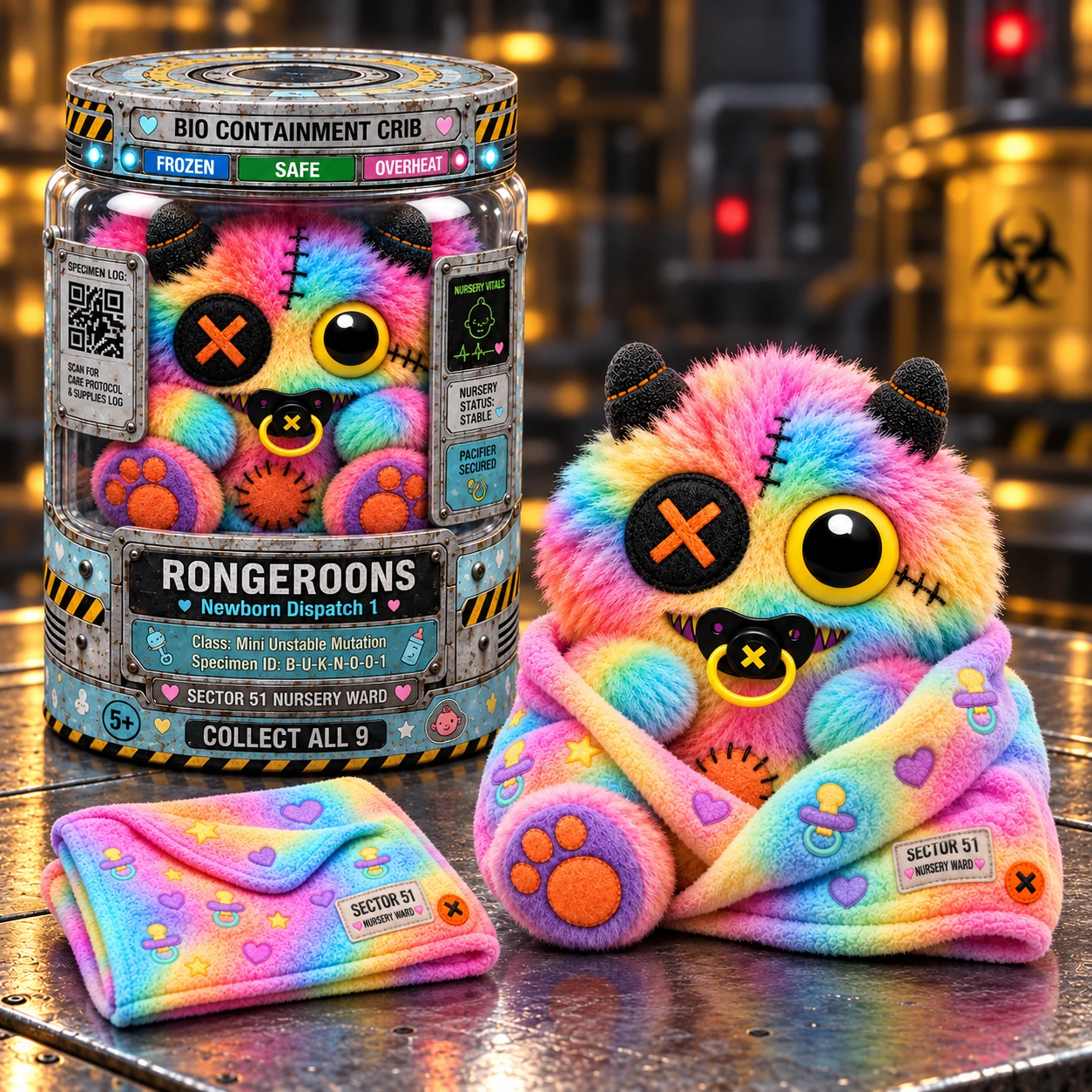
Each Rongeroon is sealed in an individual Bio-Containment Pod. The plan shifts from keeping every creature inside one failing facility to transferring them beyond Sector 51.
Controlled descent and dispersion keep the subjects separated during deployment. The pods carry more than a specimen: they carry the evidence of an experiment gone wrong. Every arrival in the outer world begins a new chapter of containment.
15 — Handler protocol
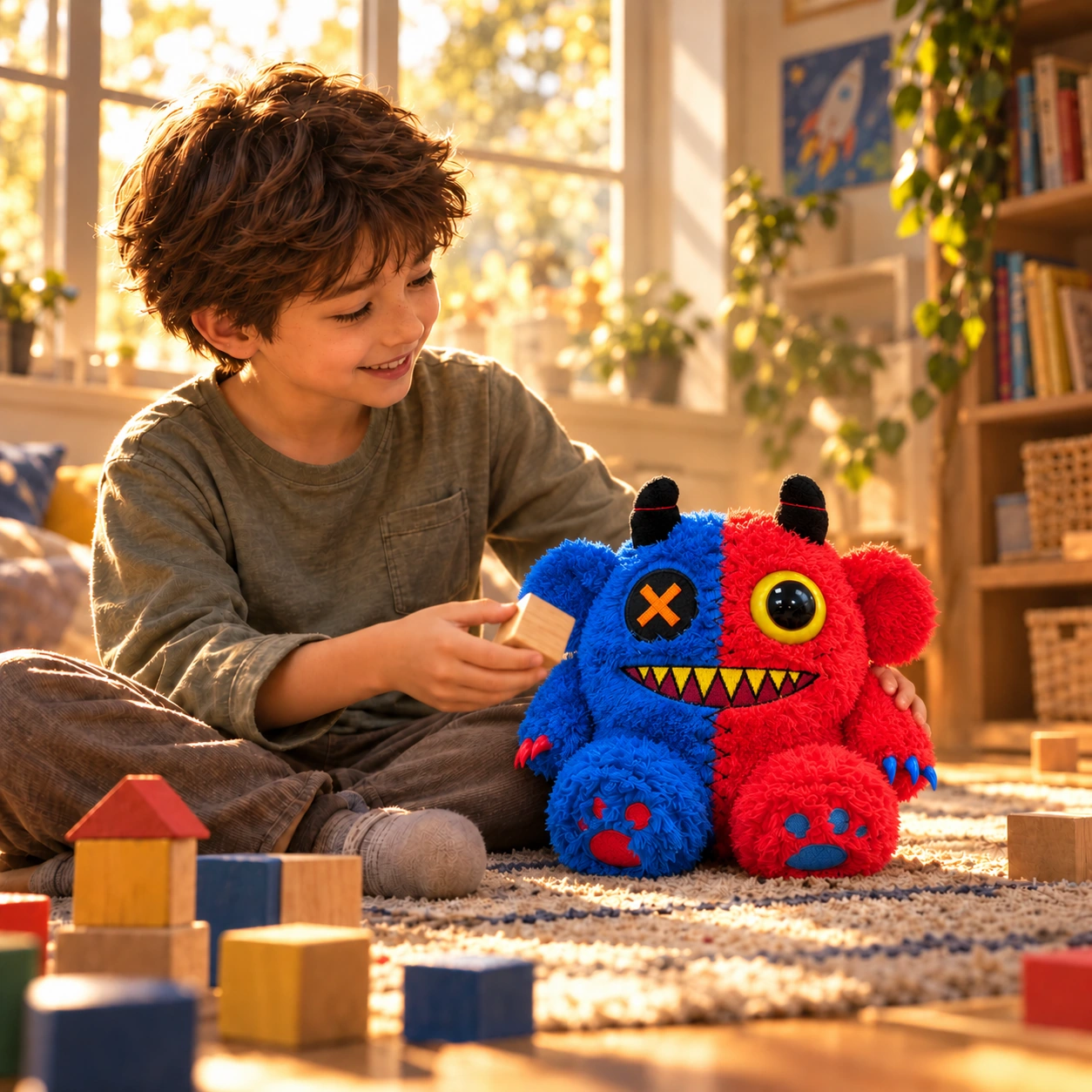
In the outer world, each handler takes responsibility for one Rongeroon. Individual care helps keep the creature calm and prevents the group instability that overwhelmed Sector 51.
A new safeguard comes from the environment itself: natural light exposure suppresses replication. Outside the lab, the Rongeroons can no longer multiply. Their chaotic nature remains, so keeping subjects apart is still an essential part of the handler protocol.
16 — Outer world chaos
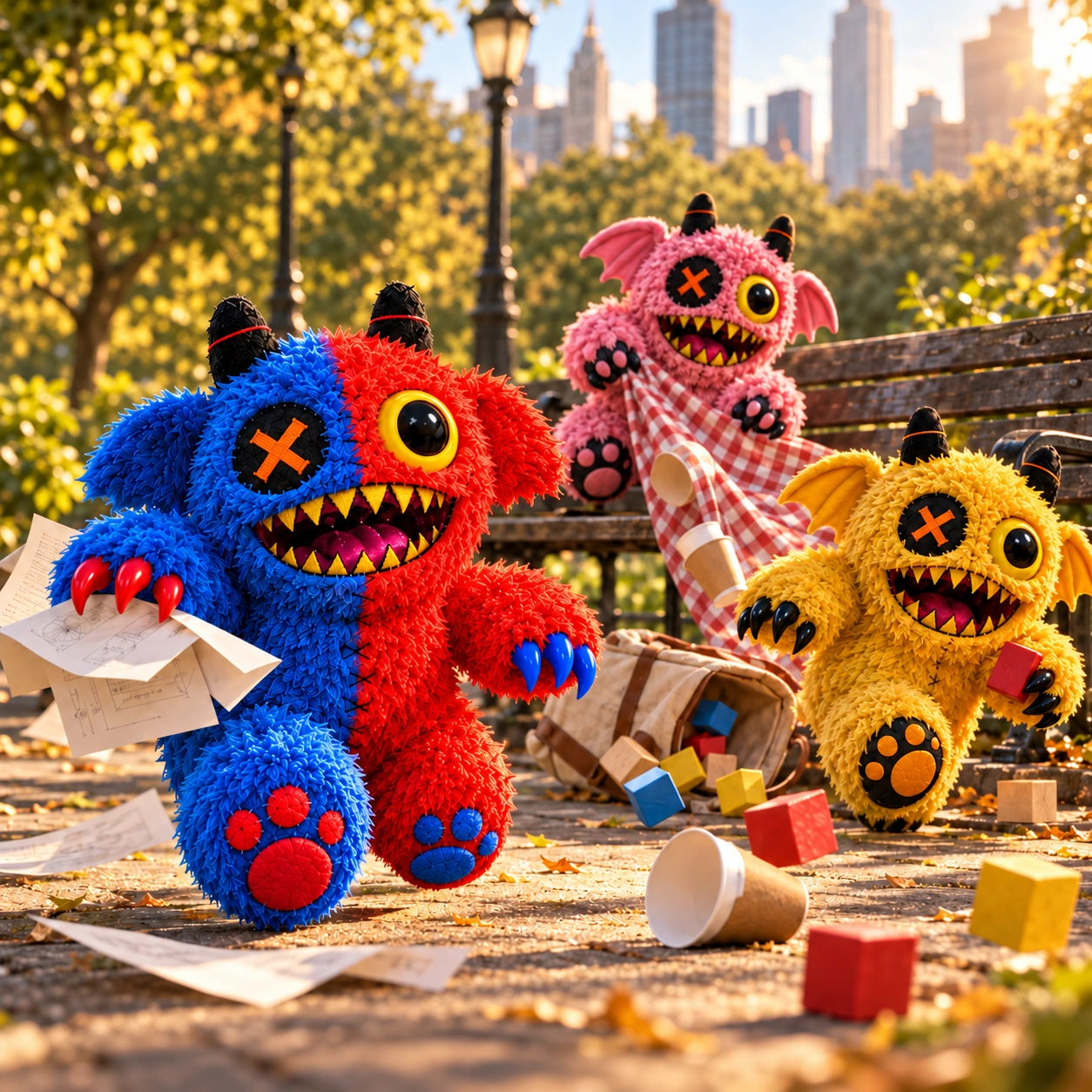
Leaving Sector 51 does not make a Rongeroon obedient. The creatures tend to escape their handlers, find one another and gather in groups. Before long, their familiar talent for chaos appears in the outer world.
Natural light means they can no longer replicate, but it does not erase their mischievous instincts. The final instruction is simple: avoid group formation. The experiment is out of the lab, and the story is just beginning.